
Tags
Rating: ⭐⭐⭐⭐💫/5
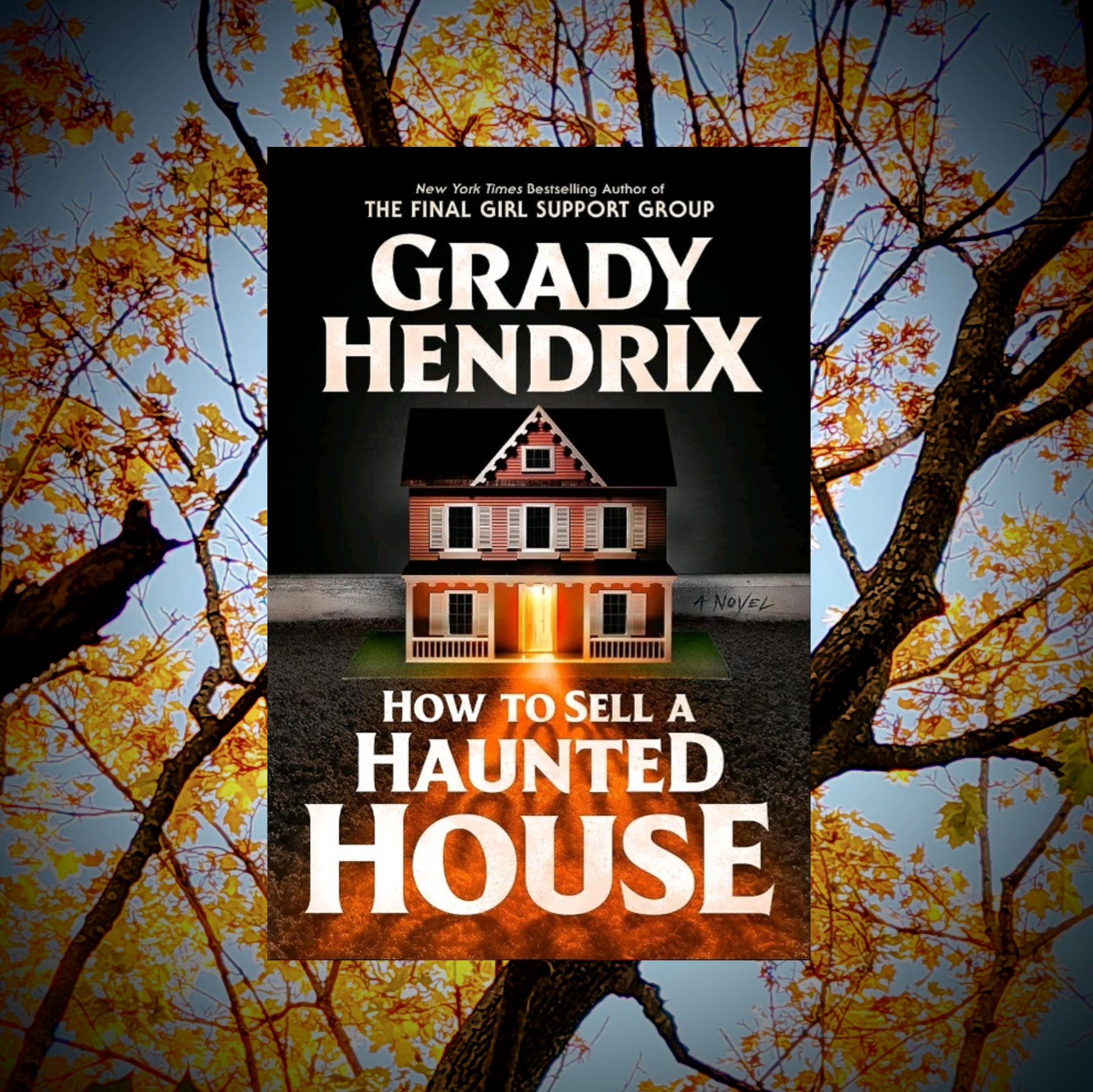
I didn’t intend to do two haunted house books set in North Carolina in a row, but here we are taking a look at How to Sell a Haunted House by Grady Hendrix. While they may share a sub-genre and setting, that’s just about where the similarities between this book and last week’s A House With Good Bones end. Where the former is creepy yet cozy, How to Sell a Haunted House is straight up horrifying.
This is my first Grady Hendrix novel (I reviewed his short story “Ankle Snatcher” two weeks ago), and I must say I’m excited now to go and read more of his stuff. How to Sell a Haunted House pulled me in and kept me interested all the way through with its flawed characters, brilliant pacing and rewarding moments of visceral terror. While it’s infused with macabre humor, it manages to be poignant in its portrayal of grief, generational trauma and the struggles of relating to family—all while its characters are being terrorized by a sadistic puppet out for revenge.
When Louise Joiner’s parents perish suddenly in a car accident, she’s forced to fly home to North Carolina to face the past she’s spent so long trying to put behind her. Specifically, she doesn’t want to talk to her under-achieving younger brother Mark, who her parents always doted on, and who seems to still hate her after all this time. And she REALLY doesn’t want to have to deal with her childhood home, crammed with too many cloying memories, and the many art projects and dolls that her mother left behind. And the puppets. Louise can’t stand being around her mother’s puppets—particularly Pupkin, who was her mother’s favorite. As Louise and Mark are forced to work together to resolve their parents’ estate, they’ll need to do the hardest thing either of them has ever done if they want to uncover the truth behind who holds the real power in the Joiner family: they’ll need to talk to each other.
The book is separated into parts that represent the stages of grief, and each part is almost its own self-contained story. This gives How to Sell a Haunted House a rolling pace where tension builds repeatedly and seems about to peak…then things ramp up again with more story, more dark humor, and more tension. Hendrix excels here at spacing out the exposition, giving enough information to keep the reader interested, and always keeping enough back to make you want to keep turning the page.
Pupkin is maddeningly terrifying as a main villain. Once he appears, It becomes evident this book isn’t so much about a haunted house—it’s more about a haunted puppet. I’m not normally a huge fan of horror involving puppets and dolls (even in my R.L. Stine days, the Night of the Living Dummy books were a hard pass for me). But Hendrix manages to make Pupkin genuinely scary.
Louise and Mark’s difficult journey through working out their grief and issues with each other to rekindle their sibling bond reads as authentic to me. As an older child, I found myself identifying with Louise a lot. And I was glad that over the course of the story, she began to see Mark as a fully-formed person with unique strengths and complex emotions, rather than the deadbeat we see though her eyes at the beginning. Both siblings are flawed and perhaps even unlikeable, but their growth throughout their story was satisfying to read.
And the one thing that I’ll always remember immediately when I think of this book: This manchild of manchildren Mark takes his terrified, bleeding, vomiting sister, who is begging to go to the emergency room, to a Waffle House to make her listen to him talk about the time he dropped out of college to join a radical puppet group.
There was a point toward the end when Pupkin started to grate on my nerves and I wished they’d just kill him already. Though he has some great action scenes, after a while it does start to feel like, “Really, are we still doing this?” However, I found the resolution rewarding enough that I didn’t really begrudge Hendrix taking his time to get there.
Relating to family is hard. One’s relationship with their family is invariably a minefield of resentment, guilt, and things said and unsaid. I think Grady Hendrix does a great job in How to Sell a Haunted House portraying the way that those blood ties and all that history can come home to roost when family members suddenly die. If a darkly funny tale of grief, ghosts and puppets that plays well with some classic horror tropes sounds like your idea of a good time, you should read this book. And you should also call your siblings.
What did you think of How to Sell a Haunted House? Which Grady Hendrix novel should I jump into next? Talk to me about in here in the comments, or scoot on over to my Instagram!
 Adequate Squatch Presents