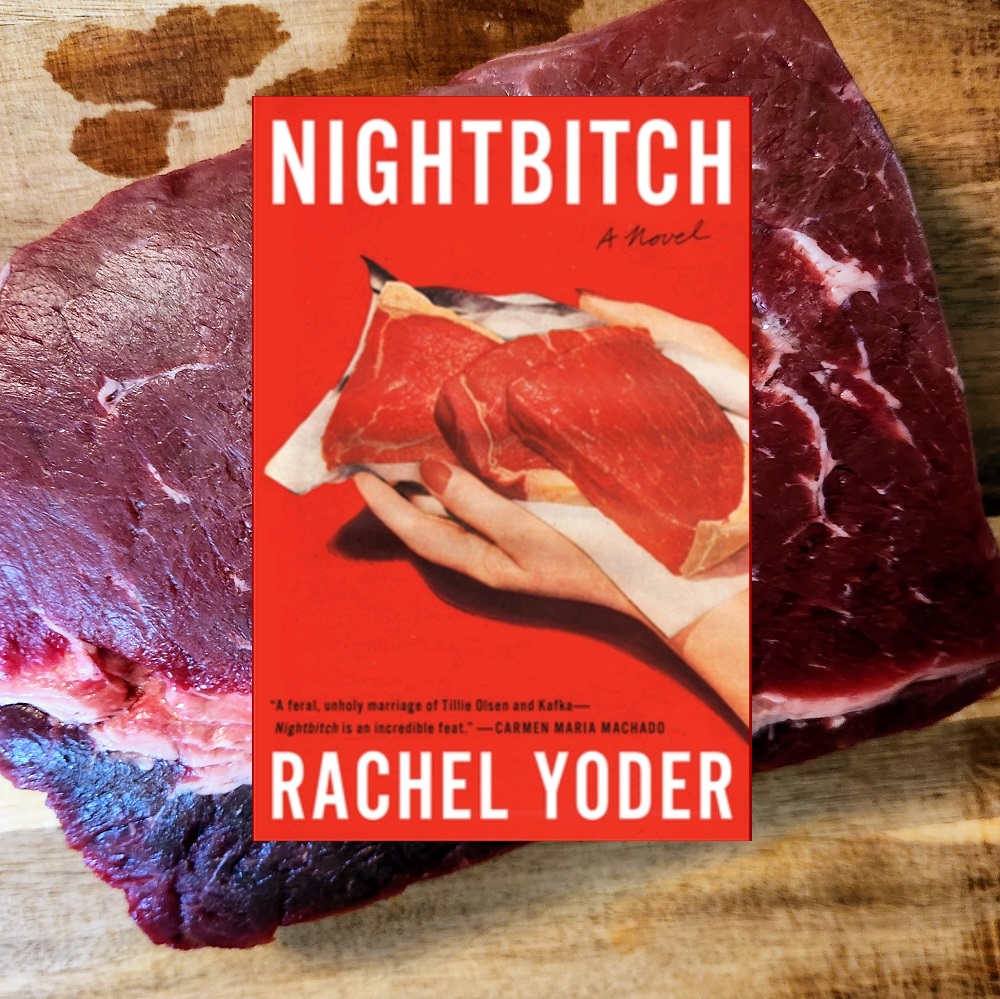
Review: Nightbitch by Rachel Yoder

Tags

, , , , ,

Rating: ⭐⭐⭐⭐

I first heard about Nightbitch on a podcast, though I don’t remember which one. All I know is that it was a short read about a woman who turns into a dog. Something about that concept really got its fangs into me that day. So I stuck it on my TBR and checked it out from the library app Libby when it came up in my queue recently.

I thought that Nightbitch would be a werewolf story, or maybe something about a raw-meat-eating superhero. It is not either of those things. Nightbitch is part feminist metaphor, part cryptid. I love all of her.

In Rachel Yoder’s 2021 debut novel Nightbitch, a mother is at her wits’ end. With her husband always traveling for work, and no friends to speak of except for the picture-perfect mommies she usually avoids at the park and library, she finds herself overwhelmed by the seemingly endless demands of motherhood. She feels taunted by futile dreams of a good night’s sleep and memories of her art world career that she gave up for…well, this. But one day, something changes. Suddenly she’s not just a mother. She’s something more. Maybe it has something to do with the new patches of hair growing on her feet and the back of her neck, the fanglike sharpness to her teeth, this inexplicable craving for bloody meat. And from amongst all these canine trappings comes an inner voice telling her to break free. Where does this new version of herself, this Nightbitch, fit into an increasingly demanding world of contemporary mommyhood?

Some of the tropes in this book:
Workaholic Husband
Unnamed Protagonist
Modern Fairytale
Burnt Out Mom
Transformation
My Instincts are Showing

I loved the honesty and vulnerability in this story. I loved how parts of it are so beautiful, while other parts are quite graphic. I loved the way it rips on MLMs while being compassionate to the women in them, and how relatable it is overall. And then on top of all that, the thing has this fairytale cadence that ends up being charming once you get used to it—I initially didn’t care for an unnamed main character and the omission of quotation marks, but it stopped bothering me pretty quickly once I was hooked by the story.

The mother/Nightbitch as a character was a treat to read. She is sympathetic and flawed, and it’s impossible to resist rooting for her even during parts when her shapeshifting causes her to make poor decisions. She feels like a fully-realized person and it’s easy to become immersed in her tale.

There are many plot threads that I wish received a little more attention—little interesting tidbits that always seem like they could be something and then never really get there. I’m talking about things like the true identity of Wanda White, or what the deal is with those three dogs that keep showing up, or what happens to the mom who disappears into the cornfield during the MLM party. Even the whole arc with her husband being away and distant all the time gets resolved rather ambiguously. These are all tantalizing trails I hoped the plot would follow through with, but Yoder abandons them in favor of long, florid lists of things Nightbitch has to do or wishes she could be doing. In this, I think this book must be trying to evoke authentic feelings of being a mother—you can’t just live your life and follow the interesting plot threads, there is annoying shit here that needs your attention.

By the way, if you are bothered by violence toward animals, skip this book. It’s not a huge part of the story, but Nightbitch definitely does rip apart some small cute animals like a dog would do. There is one particular scene in which the killing is described in graphic, visceral detail.

I also wondered: Where are Nightbitch’s neighbors during all the events of this book? They never seem to be around while she’s being undressed by a pack of free-roaming dogs, running around the neighborhood naked on all fours, or hunting down and killing small urban mammals with her bare hands. That right there is the most fairytale thing about this story: surely someone would have called the cops.

Complaints aside, though, I see Nightbitch sticking with me. I’m sure I’ll be re-reading it in the future. There is something comforting in the humanity and triumph of Nightbitch herself. By becoming doglike, she throws off the shackling expectations of society and the patriarchy. She gains a confidence in her feminine instincts and discovers mom nirvana through embracing her canine side. The whole metaphor is pretty unsubtle, which seems to be a sticking point with some critics of this book. However, subtlety isn’t always necessary to an effective metaphor, and this one did the job for me.

Rachel Yoder’s Nightbitch gets a 4 star rating from me. While I think the plot could have been meatier, I really really liked it as a work of great humor and emotional vulnerability. Any woman, and especially any mother, will be hard-pressed to not see herself somewhere in this modern fairytale.


Review: The Witching Hour by Anne Rice

Tags

, , , , , , ,

Rating: ⭐⭐⭐⭐💫

I just finished Anne Rice’s expansive 1990 novel The Witching Hour, or as I like to call it, Sexghost: A Southern Gothic.

I tried and failed to read this book when I was seventeen. After having read the first three books of The Vampire Chronicles, to say I was obsessed would have been be a gross understatement. Rice pulled me into this darkly beautiful world of sexy immortals who had lots of adventures and inner turmoil. I wanted to be one of them so badly! So I went into The Witching Hour looking for more of that sort of feeling.

This novel, which gives an exhaustive description of each character’s entire life experience before much of anything plot-related happens, was not it. I got a little over a hundred pages in, then summer ended and I’m pretty sure I just left the book at my grandparents’ beach house.

Anne Rice ended up back on my radar recently, probably because of a podcast, so I figured it was time to give The Witching Hour another whirl. I did make it through to the end, though it felt like a slog at times. I’m really glad that I powered through, though, because this is a gorgeously crafted, luscious work of horror that deserves your time.

At a decaying house in New Orleans, an old woman sits on the porch. Both—the house as well as the woman—are rumored to be haunted. Across the continent in San Francisco bay, clairvoyant surgeon Rowan Mayfair rescues a man from the ocean. He returns to life with the power to see into the past of any object he touches. They’ll soon discover that their lives are already intertwined in extraordinary ways. In Anne Rice’s epic saga The Witching Hour, Rowan and Michael journey back to their home town of New Orleans to learn of the Mayfair legacy and how it’s connected to their destiny. This rich and artful history of the powerful Mayfair witch family tells a tale of forbidden romance, corruption, and an unbreakable pact with a supernatural force. Will Rowan’s powers be enough to save her from being consumed by her family’s past?

Some of the tropes in this book:
Bad Powers, Good People
Good Powers, Bad People
13 Is Unlucky
Tangled Family Tree
Switching POV
I Just Want To Be Normal
Medicate the Medium
Psychic Powers
Superior Successor
Powerful family

I’m really glad I experienced this book mostly in audiobook format. I have a hardback copy as well, and I read from that here and there, but mostly I listened to The Witching Hour on my earbuds. That was the right way to do it. While Rice’s imagery is vivid and haunting, the characters layered, and the plot built on a strong foundation of in-world history, that plot takes a REALLY REALLY LONG TIME to get moving. You have to put in a lot of time on that backstory. It was nice, then, to passively cruise through those parts while I went about my day taking care of my responsibilities.

Rice’s gorgeous prose is the saving grace of this work. It is rich and deep, like a decadent high-end dessert. When she describes the First Street house rotting in the New Orleans humidity, she engages every sense so that you swear you can feel the suffocating heat and smell the flowers growing wild in the neglected gardens there. Each chapter feels like a setpiece you could almost walk through.

And speaking of the house, it’s possible that I enjoyed reading about the house more than any of the actual characters (and I enjoyed the majority of the characters quite a bit). In a way, this book is like a really long, dark episode of Extreme Makeover: Home Edition. Early in the novel, we learn that the protagonist Michael enjoys “house movies,” films in which a grand old house figures prominently . This is definitely a house book.

One way The Witching Hour stands out as surprisingly progressive is in its portrayal of a lead female character with sexual agency, who really knows what she wants and voices it frankly. I like Rowan as a character quite a bit—even though the sex ghost stuff gets pretty bizarre there toward the end. We get it, Anne, you’re a kinky bitch.

On that note, there is a whole heap of problematic sex stuff in this novel. From incest that makes the Targaryens look like the Brady Bunch, to statuatory rape, to incredibly mind-boggling things I can’t mention for spoilers, The Witching Hour is filled with it. Rice did not shy away from sexual horror. Anyone who finds themselves upset by that brand of terror will not be into this book.

I was a bit bothered by the fact that, despite this book being set mostly in New Orleans, no black characters were developed in any meaningful way. The ones that do appear are either servants or just there to be atmospheric—like when Michael is walking through his childhood neighborhood noticing how rundown it’s become, and he realizes that no white people live in the area anymore. Some may argue that that’s likely accurate to New Orleans in the late 80s, but even if that’s the case, ouch. BIPOC representation wasn’t encouraged in fiction back then the way it is now, but still, I’m disappointed that Rice had the opportunity and didn’t take it.

Last gripe: Michael didn’t really need to put any effort into looking for answers, did he? Fortunately for him, Aaron is there to function as the Exposition Fairy, literally handing Michael the “How We Got Here” of it all in the form of a file on the Mayfair family. Rice doesn’t summarize the contents of this file from Michael’s point of view, oh no, she slaps the entirety of the file right into the middle of this book. It was already both dense and lengthy, but Rice made a decision between the main plot and dedicating space to the immensely detailed family history. Choosing to go for the history feels a little self-indulgent.

But then again, I can’t argue with the results. I was absolutely riveted by the time, 45 hours into the audiobook, that Lasher and Rowan were finally together in the same room having a conversation. There was so much buildup getting to that point, so many agonizing hours of varying eyewitness accounts and achingly detailed descriptions of everything. Somehow, though, Rice was able to summon with her beautiful voice a level of dramatic, disturbing horror that made the journey feel worth it. I felt well-rewarded for my time.

The Witching Hour by Anne Rice gets 4.5 stars from me. She took this story to some truly bold, horrifying places. I can’t count the number of times I muttered “what the fuck” out loud to myself while listening to it. It is dense and lush, and sometimes you’re just trucking along enjoying the scenery when SNAP! something darts out to bite you, and you’re like, “oh my god Anne Rice, what did you just do to me?” And while the novel could have benefitted from some abridging of the voluminous Mayfair family history in favor of the main plot, the result by the end was so enjoyable to me as a horror fan that I almost feel bad taking half a star away.

What are your thoughts on this book, or on Anne Rice as an author? Chat with me in the comments!

6 Public Domain Horror Novels You Can Read for Free Right Now

Tags

, , , , ,

If you’re always chasing the next good scare, then you know what a dent that horror habit can put in your book budget. But it doesn’t always have to! Because we’ve been enchanted with scaring ourselves and each other for millennia, there are plenty of eerie tales out there in the public domain, just waiting to find a new home inside your brain. Read on for a list of legendary spine-chillers that you can find for free online whenever you want.

The Vampyre

Read The Vampyre free through Project Gutenberg

Conceived at the same Lake Geneva retreat where Mary Shelley famously penned Frankenstein, The Vampyre has the distinction of being the first English vampire story ever published — pre-dating Dracula by over 70 years. This tale written by Dr. John Polidori follows the independently wealthy gentleman Aubrey as he becomes acquainted, and travels around Europe, with the mysterious Lord Ruthven. As the nobleman’s debauchery escalates, Aubrey begins to understand that there may be a supernatural predator hiding behind Ruthven’s morose playboy façade.

The Night Land

Read The Night Land free through Project Gutenberg

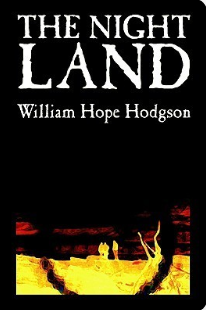
You are on Earth in the far future. The sun is dead, and the remnants of humanity all live together in a giant metal pyramid. No one can go outside, as that would mean facing the inhuman (in some cases formerly human) monsters that live out there in the dark, waiting for the last of Earth’s volcanic energy to run itself out so that they might claim man’s last bastion for the darkness. This is the setup for William Hope Hodgson’s 1912 novel The Night Land, a work of fantastical horror that H.P. Lovecraft deemed unforgettable (if somewhat verbose) in its dark, macabre imagery. This somber future landscape is so captivating and influential that over a century later, writers are still churning out tales set in Hodgson’s haunting Night Land.

Frankenstein

Read Frankenstein free through Standard Ebooks

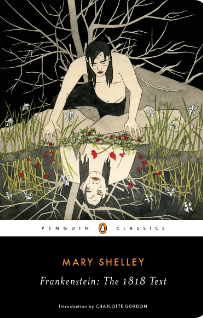
One of the most famous novels of the 19th century, Frankenstein was written while western Europe was experiencing a renaissance in the sciences, with new and seemingly groundbreaking discoveries being made practically every day. But what if one of those ambitious doctors decided to take on the ultimate villain: death? That’s the question that Mary Shelley, the mother of science fiction, explores in her heartbreaking and bone-chilling gothic tale of an ambitious medical student who must learn to face the consequences of his curiosity.

The Mysteries of Udolpho

Read The Mysteries of Udolpho free through Global Grey Ebooks

Love a dark romance set in a crumbling castle? How about forbidden love, fallen nobility and grand journeys through picturesque European vistas? If that sounds like your vibe, then Ann Radcliffe’s The Mysteries of Udolpho ticks all the boxes. This genre-defining late 18th century gothic novel follows Emily St. Aubert as she’s forced to move in with her aunt and her aunt’s shifty new husband to a remote castle in Northern Italy. Separated from her true love and fending off unwanted advances from a disgraced count, Emily’s life spirals into terror as she struggles to separate the ghosts that haunt the castle from those haunting her soul.

The Island of Doctor Moreau

Read The Island of Dr. Moreau free through Planet Ebook

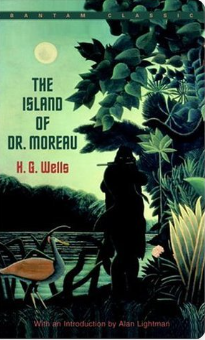
You’ve never had a tropical island getaway like this. H.G. Wells explores what it would be like to be stranded in the South Pacific with a mad scientist and his creations in this extraordinarily dark 1896 sci-fi novel. It follows in the footsteps of Shelley, dealing with themes of playing god and what it means to be human, and building on them to probe at the ethical controversies surrounding late 19th century advances in science and medicine. Filled with bizarre monstrous humanoids and a sense of foreboding that settles in almost immediately and slowly builds, this surprisingly short work is a densely-packed grotesquerie that asks the still-timely question: Just because science can, does that mean it should?

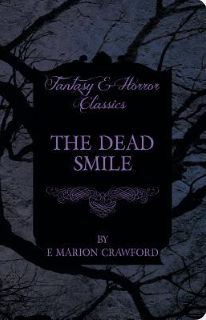
The Dead Smile

Read “The Dead Smile” free through Digital Eel

Picture a grin that is so infectious, so evil in its stubborn persistence, that it lives on through generations. That’s the inspiration for “The Dead Smile,” Francis Marion Crawford’s masterful tale of a banshee, a vindictive corpse and a forbidden love. This short work of horror is perfect for the reader who loves poring over gorgeous prose while getting the creeps. Forty-four pages of concentrated poetic dread, this blood-chilling novella is quite potent in its ability to horrify as it delivers repeated gut-punches of shock and fear.

Any of these classics is your perfect companion for a stay at a cabin in the woods, or a dark, stormy night—and they don’t cost a cent. Be sure to light a fire (or turn on a space heater) to warm you while these dark tales chill your soul.

Do you have recommendations for public domain works of horror that aren’t mentioned here? Let me know so I can add them to my list!

Re-Read Review: The Burning (The Fear Street Saga #3) by R.L. Stine

Tags

, , , , ,

This is part three of a three-part review of The Fear Street Saga by R.L. Stine. Click here for part 1, The Betrayal. Or click here for part 2, The Secret.

Rating: ⭐⭐⭐⭐

The Fear Street Saga 3: The Burning was the first book in this trilogy that made it into my greasy little kid hands. I was in the fourth grade at the time, and that month our teacher assigned us a book report that could be about any book we wanted. I turned in 4 handwritten pages, front and back, that were essentially just a very detailed, bordering on plagiaristic, summary of the whole Hannah and Julia plot arc. It was the most tragic and horrifying thing I’d ever read. I was completely obsessed.

Fun fact: Ever since then, the song “(I Just) Died in Your Arms” by Cutting Crew has reminded me of this book.

The final Fear Street Saga book, The Burning, follows Simon Fear as he debuts in New Orleans with a new name and a new ambition to bring the freshly-christened Fear family back to its former glory. When he sets his sights on the rich and glamorous Angelica Pierce, he knows the only way to win her is to use the terrific powers of his ancestors to remove anyone who stands in his way. Later on, Simon’s daughters Hannah and Julia struggle to come of age in the high society of their new town, Shadyside. But being a teenager isn’t easy when the strings are being pulled by the unseen hands of their family’s curse… Then, Daniel Fear tries to reconnect with long lost family in Shadyside, only to find himself falling in love with Nora Goode. They know that only a marriage between them can unite their families and end the curse. But will Simon Fear allow it?

Some of the tropes in this book:
Gold Digger
Artifact of Doom
Rich Suitor, Poor Suitor
Hereditary Curse
Murder by Mistake
Let the Past Burn
The Cassandra

I loved cracking open this book and immediately jumping into my favorite part of the whole trilogy: The whole plot arc of Simon trying to win over Angelica. Perhaps it’s because it was my introduction to these books, but even reading it now I found it to be the most fun segment out of all three novels. The ballgowns! The Opera! The horrific deaths! I also love Angelica’s glamour and mystique, and wish Stine had done more with her in the latter half of the book.

As mentioned in the intro, the segment with the sisters in the second half of the book blew my preteen mind. I still enjoyed it in this reread, though their “awkward boring sister vs. charming beautiful sister” dynamic didn’t land as well for me this go around. Part of this is because of the characterization of the sisters—like geez, everyone’s thoughts about Julia are so mean!—but I think another part is how it begins from Julia’s point of view, then switches to Hannah for the remainder. I feel I would have preferred it if the viewpoint had either switched back and forth between them more consistently, or just stuck with one sister all the way through.

Also, why don’t we get to find out what happens with Elizabeth Fier from the last book? She’s the POV character for around 1/4 of The Secret, but the only thing we learn about her after that book is that she gave Simon the evil Fear family pendant at some point before he left their home for New Orleans. Please, Jovial Bob, couldn’t we get just one measly paragraph about Elizabeth for continuity?

And another thing: A Fear tries to marry a Goode to break the curse AGAIN?!? That’s three times in three books! In so many generations of Fears, can’t we see one of them come up with a slightly better or at least different idea for breaking the curse?

With all it’s faults, though, The Burning still kills it with the pacing, ambience and action that makes these books so enjoyable. Simon holding his dying daughter in his arms is the image that haunted me the most when I read these as a kid, but others such as the riverboat scene and Simon and Angelica drinking blood together were perhaps even more fun to experience as a grownup.

I still have that original copy of The Burning that I got from the grocery store. The front cover is missing. The spine is unreadable, but still in one piece. Of all the books I’ve lost and donated and “lent” over the years, I’ve never been able to let go of this one.

This is the book that cemented my love of reading late into the night, promising over and over that I’ll go to bed after this next chapter. Of reading something terrifying when I’m alone, something that makes me suspicious of the darkness around me so that I shiver and in a burst of energy get up to turn on all the lights. It’s because of this experience that I went on in my teenage years to seek out incredible horror writers like Anne Rice, Stephen King, Bram Stoker, and so many more.

Four stars for The Burning, and a strong recommend for young people who are just starting to dip their toes into horror. While this trilogy isn’t by any means the best preteen horror out there, it’s a bone-chilling romp that makes a great gateway to the genre.

Did you read The Fear Street Saga as a kid? What were your thoughts then vs. now? I can’t wait to hear what you think, so leave me a comment below!

Re-Read Review: The Secret (The Fear Street Saga #2) by R.L. Stine

Tags

, , , , ,

Rating: ⭐⭐⭐+

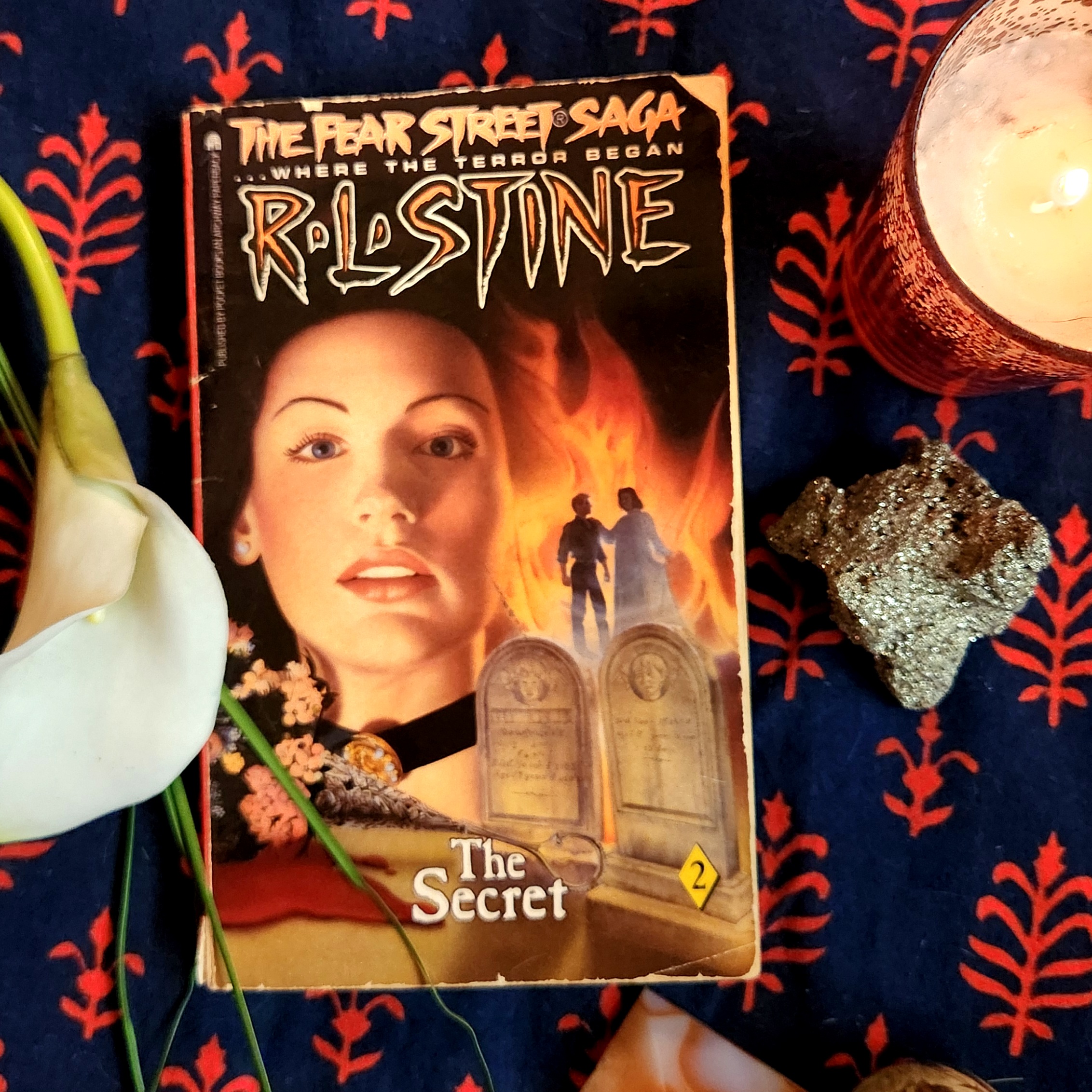
The Secret, the second entry in R.L. Stine’s trilogy The Fear Street Saga, continues the origin story of the curse placed on the Fear family. If you read my last post on The Betrayal, then you’ll know that I found this series as a young kid—I was just nine years old, probably a little young for the level of juicy terror and gore peddled by Stine in this series. But I was hooked into the suspense and drama of it all, and age restrictions weren’t going to stop me.

Perhaps being below the intended age bracket is part of the reason this trilogy was so impactful for me. The Secret in particular shook me with its dark imagery and tragic characters. Of course, reading it as an adult has been a completely different experience. Its flaws are much more apparent to me now, but interestingly I enjoyed this one more than The Betrayal this time around, even though previously it was the opposite.

In The Secret, Ezra Fier is hot on the trail of the villainous Goodes when he and his family arrive in a town that’s been gutted by a terrible plague. In a place with so much hate and death, it doesn’t take long for the curse to find them… Jonathan survives Wickham Village and falls in love with Delilah, a preacher’s daughter. If being with her feels so good, then why do bad things happen seemingly from the moment they meet? Then, Elizabeth Fier unearths her ancestors’ mysterious amulet the same day a handsome drifter is welcomed into her family’s home. When she and her sister both catch feelings for the charming Franklin Goode, they have no way of knowing that their fates are already entangled with his.

Some of the tropes found in this book:

Moves Around A Lot
Hereditary Curse
Feuding Families
Artifact of Doom
Sins of Our Fathers
Ghostly Goals
Sibling Triangle
Bewildering Punishment

Right off the bat, The Secret comes in hot against the backdrop of a premium horror setting: a town with corpses as its only remaining inhabitants. Yes, corpse-ridden ghost town, let’s gooooooooo!

I also enjoyed that this book had a character with a longer POV. Even though The Secret is the shortest of the three books, Jonathan is the character we stick with the longest in the whole trilogy, clocking it at a whopping 91 pages from his viewpoint. Unlike other characters up to this point in the series, we see Jonathan survive, learn and grow. The character development in these books, short and fast-paced as they are, is pretty minimal. So it’s nice to have a character who is a little more filled-out.

Another strength this book had over The Betrayal was female characters who actually did interesting things that contributed to the plot. Jonathan’s sister Abigail takes it upon herself to drag her brother to explore the ghost town and lay some of the corpses there to rest, unwittingly unlocking a mystery that will unleash untold horrors on her family. Delilah also ends up being quite a bit more manipulative than she seems at first blush. Chicks in this book are taking charge, and I am here for it.

**SPOLER-RIDDEN RANT WARNING**
Skip the following three paragraphs if you want to remain un-spoiled for The Secret

Unfortunately this novel reaches a premature climax with the ending of part two. The third and final part is more or less a re-skin of the last part of The Betrayal. There are differences, but the moving parts are mostly the same: An unsuspecting family of Fiers, a handsome drifter concealing murderous intent, and a lone survivor to carry on the grudge.

And then there’s the absolutely mystifying way that part two of the book ends: the curse just…stops for 100 years? Apparently all the Fiers needed to do to stop the curse was…get rid of the pendant that literally has the word EVIL engraved on it?? Like, not even destroy it, just hide it really well??? Part 3 starts with a new family of Fiers, Jonathan’s great+ grandchildren, living a prosperous life of blissful curse-ignorance. I get that Stine needed to move the plot forward in time quickly, because it’s a long way from the 1740s to Nora’s framing device in 1900. But there has to be a better way to get there than just hiding the macguffin like a toy from a dog, then rebooting a plot it seemed I’d just read in the previous book.

And last gripe I swear: Where the heck did Franklin “The Last of the Goodes” Goode come from? I feel like Stine could have graced us with at least a page or two of backstory as to what’s been going on with the Goodes for the last 100 years for this dude to still be carrying a grudge when no one else seems to remember what he’s mad about.

**END SPOILER ZONE**
The rest of this article is spoiler-free

Though all that may make it sound like I really disliked the final part of this book, it was…fine. Reading about two sisters competing for the affection of a mysterious newcomer was actually fairly fun. And all together, I do think I enjoyed this book a bit more than The Betrayal. Images like a mother chasing the blue-ribboned hat of her dead daughter, and a knitting needle sticking out of someone’s chest have lived on in my brain since I first read these as a child, and they don’t disappoint today.

Overall, The Secret gets a 3.5 star rating from me. While it suffers from many of the same flaws as the first book, like weak dialogue and characters on mystifying plot rails, I enjoyed the characters in The Secret quite a bit more and actually felt bad when the horrors of the curse befell them. It also does a great job setting things up for the third and final book, The Burning. Number three is the strongest of the trilogy, in my (perhaps somewhat biased) opinion, so keep an eye out for my next review in which I dish all about it.

What did you think of The Secret, or The Fear Street Saga as a whole? Share your thoughts in the comments!

Re-Read Review: The Betrayal (The Fear Street Saga #1) by R.L. Stine + A Reintroduction

Tags

, , , , , ,

Before we dig into this Fear Street Saga review, a reintroduction is in order. If you’ve been here before, you may notice some big differences, like the name Adequate Squatch Reads. The old name (Mal Has Bookworms) didn’t really seem to fit anymore (and honestly, was a little bit gross). After a lot of deliberating and weeding out of name ideas that were already taken, I settled on Adequate Squatch because it sounded cool, and because it seems accurate to how I often feel as I move and exist in the world—like I’m a bit of an oddball, but one who’s doing a pretty okay job of blending in.

If this is your first time visiting, hello! I’m Mallory, a food-motivated Gemini who lives in the Midwest and really enjoys a good book or three or seven. I’ll be posting reviews and other book-related content. Check out my Reviews page to learn about my book review standards, and feel free while you’re there to browse my archive of old posts.

If you’re a lover of books, too, then come interact with me about them on social media! Follow @adequate_squatch on Instagram, or click here to be my friend on Goodreads. I can’t wait to talk smack about books with you! ^.^

ANYWAY. On to the reason you probably came here.

A Review of The Betrayal by R.L. Stine

betrayal

Rating: ⭐⭐⭐

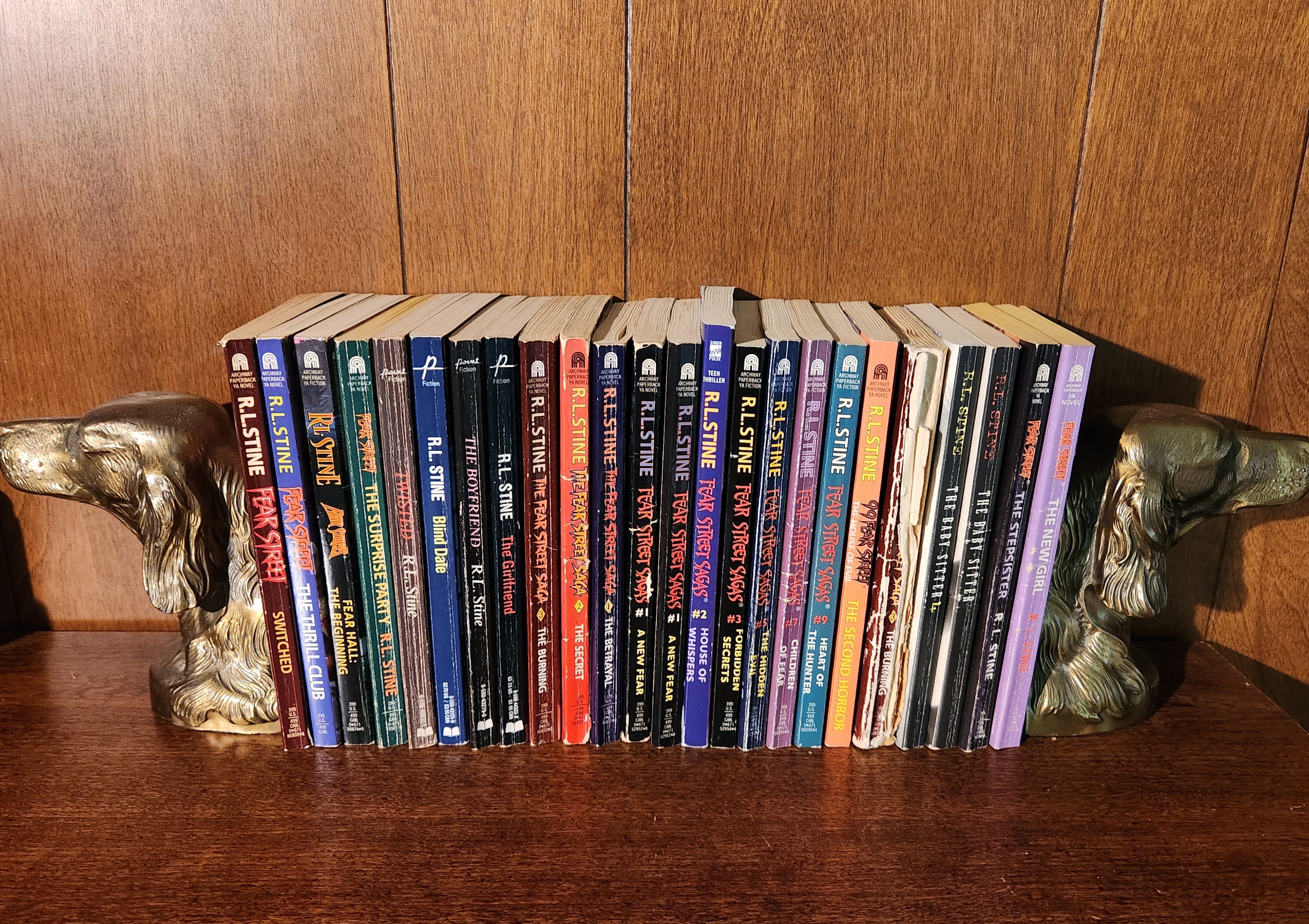
I recently came into a lot of Fear Street books.

fear street

Combing through these gems, I was incredibly psyched to get the opportunity to revisit one of my formative reading experiences: R.L. Stine’s The Fear Street Saga.

I read this trilogy out of order the first time around. I was nine years old and already a Goosebumps afficionado, with a few Fear Street books under my belt as well, when I first found a copy of The Burning (Book 3) in the little books and magazines section of the supermarket. It promised to be the origin story of the evil that plagued the citizens of Shadyside. The evil that made 99 Fear Street uninhabitable (for the living, anyway). The same evil that had possessed those cheerleaders! I HAD TO KNOOOOOOOOW!

I took that book home and devoured it. Then I immediately went back to the beginning and read it again. I couldn’t get it out of my head. It had everything I wanted in a story: a generations-spanning curse, forbidden love, fashion, betrayal, witchcraft, and people dying in all sorts of horrific ways. As soon as I could, I found the nearest willing adult to take me to the Tyrone Barnes & Noble to snag the first two books.

Upon finishing the entire trilogy, verily did I become shook. I’d never read something so haunting, violent and all-encompassingly dramatic. It was a shot of Miracle Gro to my budding horror fascination. As horror and its adjacent media genres are basically 60% of my personality today, it’s clear that I owe a lot to these books. Seriously revisiting them as an adult seems like the least I can do.

I had originally planned for this to be a single review for the whole trilogy, but it turns out I have a lot of opinions about these books. So this will be a three-part review, with one post dedicated to each book. Come along with me as I dig into the first book in this series: The Betrayal.

The Fear Street Saga (Subtitle: …where the terror began) was a young-adult horror trilogy by R.L. Stine. In it we meet Nora Goode, the last survivor of the fire that swallowed the Fear mansion. Nora knows of the horrific origins of the Fear family and the curse that has rained misery down upon its descendents. She knows about their legacy of evil and misfortune, and that it won’t stop with death. She knows the story must be told to prevent further tragedy.

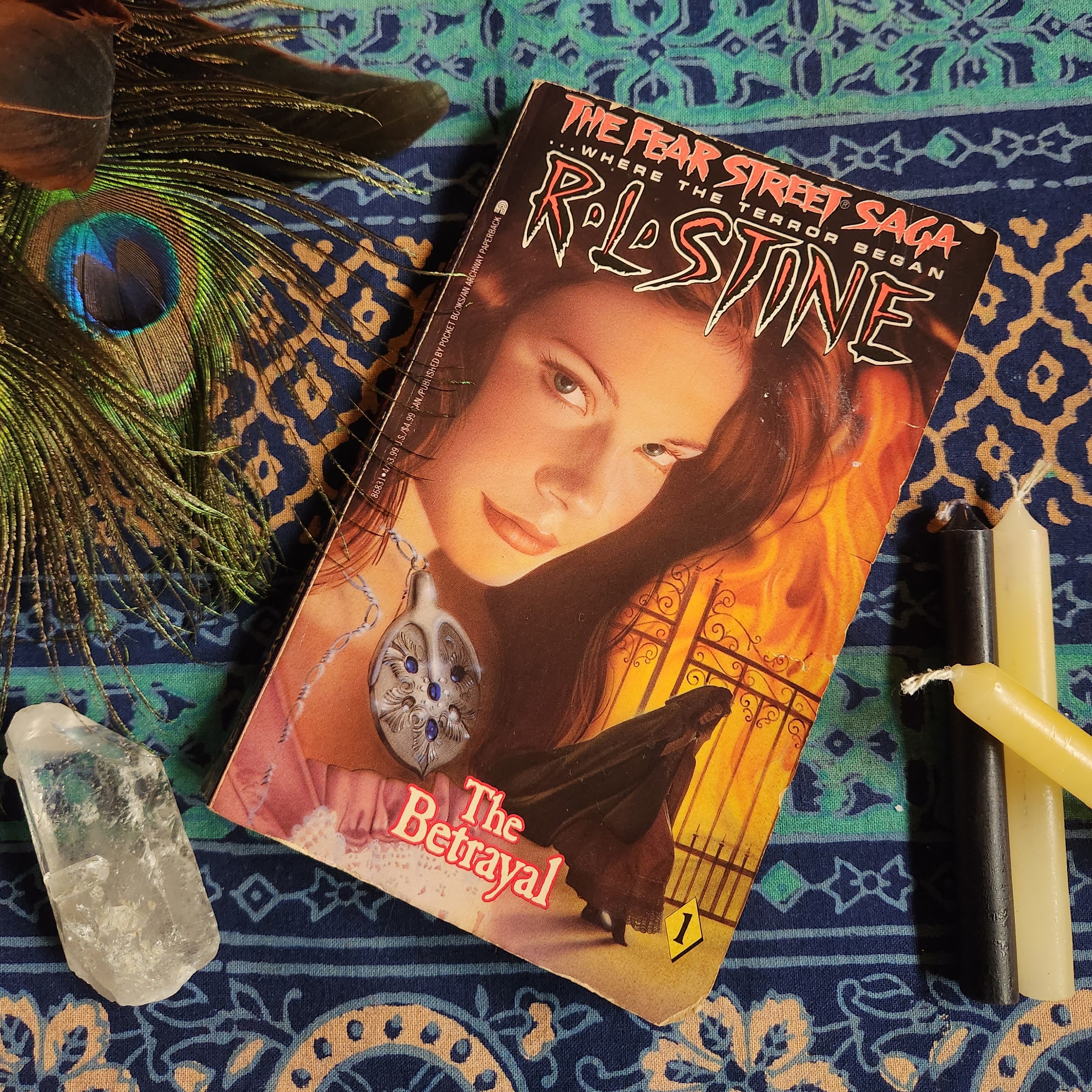
The Betrayal tells the story of Susannah Goode, a young 17th century settler who has the misfortune of falling in love with Edward Fier. When Edward’s father Benjamin accuses Susannah and her mother of witchcraft, it sets in motion a chain of events that lead to a horrific curse that the Fiers can never hope to escape. Fleeing town and settling far away on a new farm can only keep the evil at bay for so long. Will Mary Fier be forced to pay the price for her family’s sins?

Note: This trilogy is not to be confused with the Fear Street Sagas, a 16-book series that Stine wrote after The Fear Street Saga. It also tells haunting tales of the Fear family and its curse, but they’re not in chronological order and there is no framing device tying them together.

Some of the tropes found in this book:
How We Got Here
Secret Relationship
Child Marriage Veto
Burn the Witch!
Artifact of Doom
Hereditary Curse
Feuding Families

Re-reading The Betrayal was like squeezing into a favorite old sweater: It’s a little small and out of fashion, but it’s so soft, it smells familiar in a really comforting way, and you remember how good you felt when you used to wear it all the time. In those first few chapters I was immediately sucked into the drama of the mansion on fire, the forbidden love between the rich Magistrate’s son and the poor farmer’s daughter, and the witch trial that seemed so maddeningly unfair.

The plot of The Betrayal is stacked with twists, turns and little cliffhangers that keep you turning the page. Then the witch trial arc ends and you realize that what seemed to be the climax of the story is only the beginning. The plot continues, following the Fiers to where they think they’re safe. You then get a front seat to the heart-pumping action as the curse comes calling. It’s just a whole lot of bloody, horrific fun.

I discovered while reading this, though, that while I love the nostalgia, atmosphere and fast-paced action of these books, like that beloved old sweater it’s just something that’s not meant for me anymore. These are 90s kids’ books and it shows. I found myself frustrated by the stiff dialogue, oversold melodrama, and plot-driven twists that made no sense for the characters—stuff that I didn’t really notice as a preteen, but which really stick out now that I’m (marginally, at least) a more mature reader. Things like the hilariously cartoonish evil of Matthew Fier and the artifically inflated drama of pretty much every scene made it tough to immerse myself in this book as much as I could when I was younger.

The handling of the female characters also bugged me. Two of the three POVs in this book are female, but the primary character trait for each of them is that they’re infatuated with a boy. They don’t have much agency of their own, and seem to primarily exist to be victims of the men’s blood-soaked schemes. As those are the actual juicy parts that move the plot forward, it leaves the women feeling like filler characters, only there to be acted upon for the sake of drama and body count.

All that being said, I truly enjoyed reading this book and there are images in it that may haunt me forever. The story of Susannah Goode as the catalyst for the curse that plagues Fear Street to this day is too good to ever forget. The mayhem that overwhelms the unsuspecting Fiers makes a worthy climax for this chilling introduction to the trilogy.

On re-read, this book earns a three-star rating from me. I understand that these are books for teens, but I also know that books for teens can be done way better than this. I would still recommend this as a really fun read for any teen or preteen who’s just starting to get into horror.

Have you read this book? Share your experience down in the comments. Then make sure you come back next week for my review of the second book in this series: The Secret.

1Q84 by Haruki Murakami

Tags

, , , , ,

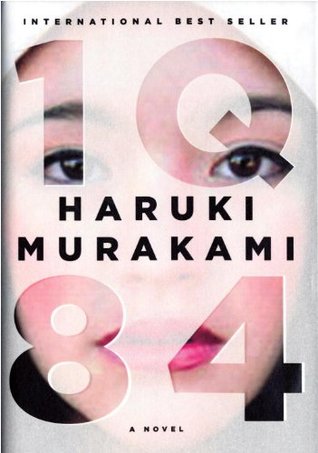
1q84Haruki Murakami’s epic masterpiece 1Q84 had been on my to-read list for nearly a decade. Now that the ‘rona has me staying home a lot more, I figured there was no better time for me to tackle this behemoth. Clocking in at over 1300 pages in the Kindle edition, it’s now officially the longest novel I’ve read (before now, that title was held by the extended edition of Stephen King’s The Stand). After more than two months, I finally finished it. After all that I can say, while it wasn’t without its flaws and frustrations, I enjoyed this book a lot and am glad I took the time to dive into it.
1Q84 follows Aomame, a fitness instructor-turned-assassin, and Tengo, an unassuming math prodigy and author, as they’re thrown into the bizarro world of 1Q84, which looks almost exactly like their current year of 1984, but with a few noticeable differences. As these two get tangled in the complicated webs spun by a local religious cult and its founding family, they rely on their own intuition, as well as simple fate, to find each other in the big, bustling backdrop of 1980s Tokyo.

As a novel, 1Q84 unfolds like a slow-blooming rose. Alternating back and forth between the two main characters (with a third character added to the rotation in part 3), each chapter gradually builds on the last, slowly adding backstory, dimension, and exposition. A lot of things get rehashed, which gets a little exhausting, but not enough so that I wanted to put the book down. For instance, characters, places, and routines are described over and over–like, I get it, the guy has a misshapen head, I don’t need to hear about it again. But often Murakami does this to add small details that weren’t in the preceding description, thus building rich images of these characters and places without throwing a ton of new information at the reader all at once. It’s a technique that a really appreciate, though it results in a plot that took a long while to get going and really grab my attention.

Another thing I noticed about 1Q84 is how every character is a paragon of their own virtues and talents, unmatched in their respective fields. Their instincts are spot-on, and they are consistently able to deduce much more about these tangled plot webs than the average person might be capable of. This infallible quality of the main characters lends to the sort of storybook-legend feel of the novel.

For the most part, I adored Murakami’s writing style and descriptions. The man is truly a master of prose. However, my main beef was the over-sexualization of the female characters. For instance, how come every time Aomame thinks of her deceased female friends, she thinks about their naked breasts? (Obviously anecdotal, but I’ve got plenty of female friends, and I almost never think of their tits.) Why are women fondling each other every time they end up sharing a bed? How many times do we have to be reminded that the 17 year-old cult leader’s daughter has huge boobs? Granted, this was a minor annoyance in what was overall a really great read (and to be fair, we also got plenty of mentions of Tengo’s penis, even though he never once experimented sexually with his male friends), but I did laugh out loud a couple times at the absurdity of these portrayals.

One more minor gripe: In 1300 pages, you’d think that there would be plenty of room to wrap up all those dangling plot threads. But you would be wrong. While most of the main plot arcs get resolved–and to its credit, 1Q84 does a fantastic job giving most of the main characters satisfying endings–when it was all over, I still had so many questions. Certain plot arcs were touched on but never followed up with an explanation or resolution, and others seemed like they were just about to get somewhere when the book suddenly ended. For my time investment, I do wish that certain elements of the plot had been explained or resolved better.

After spending a long time in the world of 1Q84, I find myself a little sad that it’s over. But I also feel a wonderful sense of achievement having finished this beautiful love story. Four and a half stars is probably the most accurate rating I could give this book. Now I’m off to enjoy a nice, short 300-pager.

The Outsider by Stephen King

Tags

, , ,

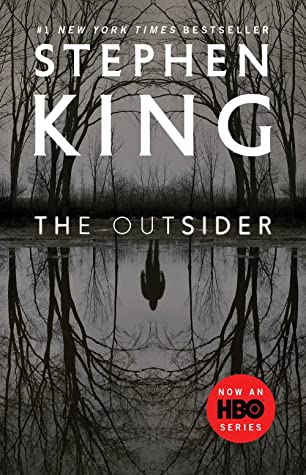
50271461._sy475_I’ve read Stephen King since I was a teenager, and to me, starting one of his books is like slipping into an old bathrobe–familiar and comforting, with the knowledge that you’re about to have some satisfying relaxation time. Relaxing with a good horror novel is one of my favorite things in the world, and King rarely fails to disappoint. The Outsider was no exception. Though I had some minor gripes, overall I really enjoyed this one, and I’m sure it’ll make it into my rotation of regular Stephen King rereads.
Primarily set in the fictional town of Flint City, OK, The Outsider follows the investigation of a horrific child murder that rocks the local community. When multiple eyewitnesses come forward to corroborate the extensive DNA and fingerprint evidence found at the scene of the crime, investigators (let by Detective Ralph Anderson) believe they have a slam-dunk case against the accused: Terry Maitland, local little league coach and pillar of the community. But when doubts begin to arise and seasoned P.I. Holly Gibney gets involved, all of that easily-obtained evidence starts to point to something more sinister…and possibly supernatural.

The things that bring me back to Stephen King’s writing again and again are his characters, and his knack for pacing and suspense. These qualities shine through once again in The Outsider. Though this is one book of several I’ve started recently (quarantine restrictions have left me, like so many others, with plenty of time on my hands), this was the one that kept me turning the pages late into the night, long after I should have given up and gone to bed. King is adept at feeding his readers just enough information to make them hungry for more, dangling the prize feast just beyond reach until the perfect climactic moment–and just when you think you’ve had your fill, another tantalizing morsel is there to keep you salivating until the end.

When I say that King’s characters are something that I enjoy in his work, that comes with a qualifier. Sometimes his characters and the way he writes them are just awkward and forced for the sake of getting a message across and/or advancing the plot. For instance, Holly Gibney doesn’t need to have a radiant smile that lights up her whole face every time he wants the POV character to find her endearing. The thing about King’s character writing that draws me in is his tight third-person perspective, the way he’s in each character’s head to help you understand and sympathize with them, even if the character is a vile and terrible person doing awful things. Jack Hoskins was such a character in The Outsider. Though he was pretty obviously a bad person, and very misled, I couldn’t help feeling bad for him and even rooting for him in certain small moments. It’s because, when you’re reading a Stephen King novel, you are that character for a brief moment; you understand them and want them to succeed. Perhaps this is why I gravitate toward his books when I need an escape from my own reality.

This wasn’t a perfect book by any means. Some things happened too perfectly, too cleanly to be believable. Characters sometimes seemed drawn forward by The Plot rather than by their own motivations. But at the end of the day, those things weren’t egregious enough to keep me from truly enjoying The Outsider, which I very much did.

I also want to briefly mention the HBO adaptation, which I watched, and which was the reason I picked up this book in the first place. The show was pretty good, but the book was far better. I couldn’t believe some of the things the show added that I very much expected to have come from the book, or some of the things that were left out. However, both experiences were enjoyable–though I’ll probably re-read the book, but skip re-watching the series.

Anyway, I can’t give The Outsider five stars, because in my opinion it wasn’t King’s best. But it was still very good, and did a great job meeting my expectations as a long-time Stephen King fan. So it gets a strong four stars from me

Ready Player One by Ernest Cline

Tags

, , , , , ,

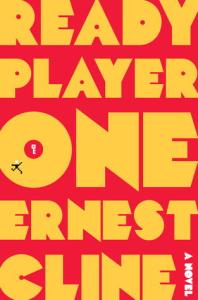
Ready_Player_One_coverIt’s this kind of book that makes me feel like a shitty reader. I appreciate good writing. I absolutely do. I recognize a master when I see him or her. I’ve read some really good authors in the past few months, even if I didn’t necessarily agree with their plot choices. The book I’m reviewing today, Ready Player One by Ernest Cline, was not the best-written novel I’ve read by a long shot. I recognize that. But dammit if it wasn’t fun as hell.
Set in a dystopian future, Ready Player One opens in an America that has been devasated by overpopulation and an unyielding energy crisis. The only thing keeping the unwashed masses in check is a thriving virtual world called the OASIS. Here, anyone can do anything. A nobody can become somebody. A person’s wildest dreams can be realized. The possibilities in this virtual utopia are nearly limitless and many choose to live as much of their lives inside it as possible. When its creator dies suddenly and wills his fortune to whomever can find his “Easter egg” hidden in the OASIS, both the physical and virtual worlds are in an uproar. And so the race begins. Young Wade Watts, a nobody living in an Oklahoma trailer park, throws himself whole-heartedly into the search for the egg. But when he uncovers the first clue and becomes an instant celebrity, no one is as surprised as he is. Thrust into the limelight, Wade finds that the stakes in this contest are far higher than he ever imagined.

Since I began this challenge, I’ve read most of the books at a plodding pace. A couple chapters during my lunch break. A few pages before I fell asleep in the evening. But I went through this one in less than a week. The world (both real and virtual) that Cline created kept me captivated from start to finish. The descriptions of the different “planets” within the OASIS, the workings of the virtual world and the interactions of the social classes within it were very interesting to me. I also found Wade’s struggles to balance his real life with his time in the OASIS to be fascinating and somewhat heartbreaking. As a whole, the plot drew me along, keeping me in anticipation of what would happen next. It was a perfect model of rising action, climax and falling action that kept me excited and left me satisfied when it was all over. No innuendo intended.

But it wasn’t all good. The main character arc was very predictable. So were the interactions between the characters — I won’t spoil it for you by saying that, yes, of course Wade gets the girl of his dreams at the end. You can see that coming from a mile away. The protagonist, a head of an Evil Corporation, is just as much of a mindless sociopath as you would expect, with no sympathetic qualities to redeem him. There was one supporting character for whom there was a twist that I didn’t see coming (while I did guess that there would be some kind of big reveal with this character, I was wrong about what that was). But for the most part, the character development aspect of this novel was rather weak in my opinion.

The other weakness of this novel was in the mountains of information on 80s pop culture. It figures pretty majorly into the plot of the novel, but the way it’s handled ends up being kind of clunky at times. The plot can be moving along quite swimmingly, and then you get three pages talking about an 80s TV show or video game that Wade has identified as important in his quest for the Egg. It’s just kind of wedged in there, and it interrupts the flow of the story. Like, it’s neat that 80s pop culture makes a comback in the future. The juxtaposition of futuristic technology with old arcade games and references to Family Ties is kind of neat, an anachronism not so unlike the steampunk trends from a few years ago. But the way the references were handled and the way that that information was communicated to the reader seemed rather hamfisted. I think it could have been integrated into the story rather more smoothly.

But these complaints were fairly minor with regards to my enjoyment of the book. It was no great piece of literature, but it was a fun and easy read. I could definitely see myself re-reading it in a few years.

And yet, with all its fun and fantasy and sci-fi appeal, this book strikes an ominous chord. It’s easy to draw parallels between what happened to the America in which Wade Watts lives and where our own country could be headed. An energy shortage colliding with a demand fed by an ever-growing population isn’t so far-fetched. And with advances in gaming technology, particularly virtual reality devices such as Oculus Rift, it’s easy to imagine people withdrawing more and more from the real world in favor of the virtual. The jump from having conference calls or hanging out with friends over Skype to experiencing them through avatars inside a virtual environment — that’s really not that big at all. And I’m sure it’s something we’ll see in the coming years. It’s exciting, but what might the consequences be if we begin neglecting the old world to live more in the new?

But there is hope! There is aspect of Wade’s reality that will never come to fruition in our own. I have reasonable confidence that, should the citizens of our nation (and even the world) begin flocking in large numbers to one of our cities, and should that city become the world’s new metropolitan hub of technology and innovation, that city will not in fact be Columbus, Ohio.

The Tales of Dunk and Egg by George R. R. Martin

Tags

, , ,

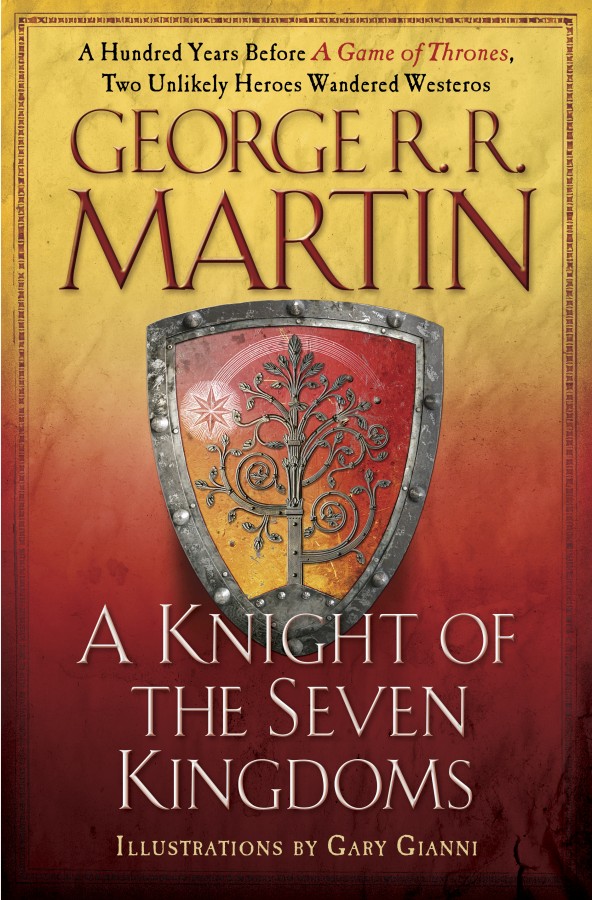
233690_900After that last book, I was feeling a bit disillusioned with my reading challenge. I hadn’t enjoyed the last few books as much as I’d hoped, and there were so many books that weren’t on the list that I actually wanted to read. So why was I wasting time with books I didn’t care about? In light of that miniature crisis, I’ve been taking a break for the last couple weeks.

I, like millions of other people, am a big fan of the A Song of Ice and Fire series. Reading it was one of the first things I did after graduating from USF, and I’ve been hooked since. Like many other GRRM nuts, I’ve spent a lot of spare time reading blogs and forums, listening to others engage in rampant speculation as they try to guess what will happen next — and it only gets worse (or better, depending on how you look at it) the more the next book gets pushed back. But reading over and over about The Grand Northern Conspiracy gets tiresome after a while. What I really needed was some actual content.

I’d been hearing for a while about the Dunk and Egg novellas. These short novels take place in Westeros a couple generations before the start of A Game of Thrones. They originally appeared in the fantasy anthologies Legends, Legends II and Warriors, and currently they are only available in those books or in graphic novel format (a collection of the three existing novellas will be released this fall). I just wanted to read the damn stories, so I tracked them down in PDF format and read them through the Kindle app on my tablet.

These three stories follow the lowborn hedge knight Ser Duncan the Tall and his squire Egg (secretly Aegon Targaryen, nephew of King Aerys I) and their adventures traveling through Westeros. Together they blunder into dangerous situations, expose treachery, and act as agents of justice. They’re short, easy reads — not nearly the level of stress and drama one gets reading ASOIAF.

I liked these novellas. They’re pretty formulaic, but have just enough little twists and turns in the plots to keep things interesting. And if you’re versed in your knowledge of Westeros, there are plenty of familiar names and locations mentioned throughout. It really adds to the rich complexity of the world that GRRM has created.

I don’t think I can really say anything here that hasn’t been said a million times all across the Internet, and I don’t want to give any spoilers, but if you’re a fan of ASOIAF, or if you enjoy watching Game of Thrones and don’t yet have the courage to take on the books, these are a great way to pass the time until The Winds of Winter and/or Season 5 comes out.

So that was a nice little detour. I’m already back to my reading challenge list — for now.