• About Me
  • Reviews

Adequate Squatch Presents

~ a book review blog

Adequate Squatch Presents

Tag Archives: literature

Review: Clytemnestra by Costanza Casati

24 Sunday Sep 2023

Posted by Mallory F in Reviews

≈ Leave a comment

Tags

books, fiction, literature, mythology, Reviews

Rating: ⭐⭐⭐⭐⭐

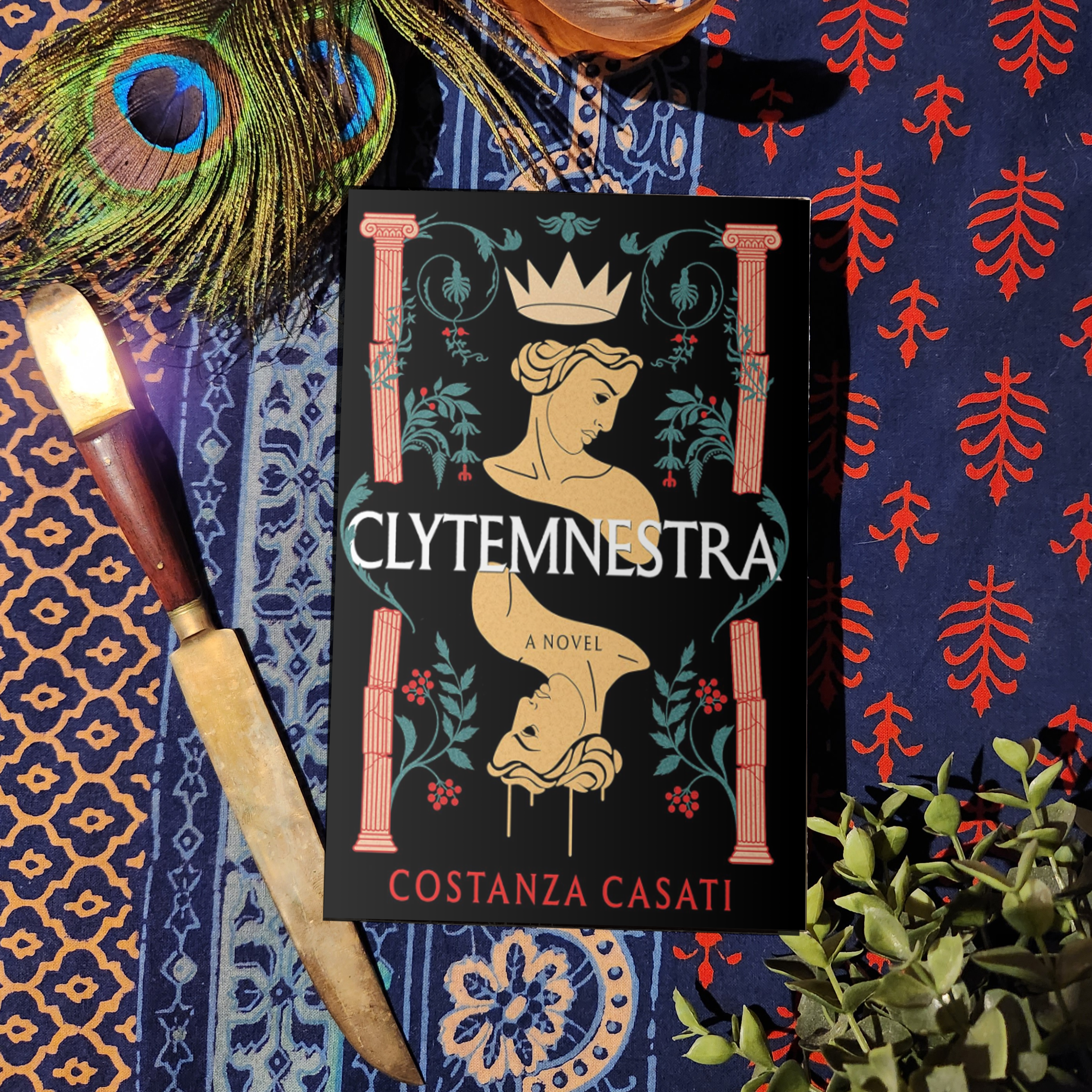
Having recently been on a Greco-Roman mythology kick, I didn’t procrastinate long before getting myself on the library waitlist for Clytemnestra. I’ve read several modern interpretations of Greek myths in the past year, so I could hardly wait to dive into another retelling. This book, a new novel from Texas-born classical scholar Costanza Casati, did not disappoint.

Clytemnestra by Costanza Casati is a retelling of the legend of the titular Mycenean queen, the wife and murderer of King Agamemnon following the Trojan war. The story follows Clytemnestra from her youth as a clever and formidable princess of Sparta, through her transition to family life, and into a world of betrayal and revenge which she must navigate. If you think you know how her story ends, think again.

Clytemnestra is set up from the get-go as a strong and imposing character. As the eldest daughter of a Spartan king, she is raised to be tough and cunning. But it’s her own natural fierceness that makes her stand out as a captial-Q Queen. Her very first scene has her tracking and conquering a lynx, seemingly because she enjoys it, or at the very least wants to impress her parents.

I would pledge myself in a heartbeat to die in battle for Clytemnestra. I applaud Casati’s ability to build a lead character who felt at once legendary and also extremely human. Clytemnestra is all but unmatched in her ability to fight and politically maneuver. She never comes across as too perfect, though—she sometimes fails, treats allies poorly, or is tricked. This fallibility makes her more relatable. She feels like a real queen who lived, not just a distant figure from myth.

But as stunning as Clytemnestra is as a main character, what really shines in this work is how Casati highlights the relationships between the many female characters. They are rich and complex, evolving as the plot progresses—the sisterly connections in particular. Love, trust, resentment, jealousy, loyalty, animosity—the full spectrum of feelings women can have for one another other throughout their lives is on display here. This is mostly because of Casati’s deftness at differentiating this cast of characters. There are so many of them, yet each (the men, too) stands out as their own individual.

My only slight gripe with Clytemnestra is that I felt the point of the book was a little too spelled-out at the very end. It didn’t ruin the book for me, but it did stick out as unnecessary—like maybe Casati wasn’t quite sure how to punctuate the narrative.

Overall, though, this is a beautifully crafted book, and I love this modernized interpretation of Clytemnestra. Casati has blessed her with a sense of justice as well as a dark side. Although I knew the ending, I was on the edge of my seat waiting to see what the Queen would do next. This is the sort of main character I’m here for.

I can’t conceive of giving Clytemnestra anything less than a five-star rating. I was absolutely riveted by it—by her—to the point of making excuses to ditch out on social activities so I could finish this book. She has been a larger-than-life figure for centuries, and while I have seen her character in other literature, I know that this is the version that will live on in my mind as the “real” Clytemnestra.

Shoutout to Olivia Vinall who narrated the audiobook version of Clytemnestra. What a superb reading.

If you agree that Clytemnestra by Costanza Casati was a stunner and want more of this sort of thing, consider these fine books:

–Lore Olympus by Rachel Smythe
This gorgeous web comic is a modern retelling of the story of Persephone and Hades. As of now (September 2023) it is ongoing. Read it for free on Web Toon, or get your hands on the graphic novel adaptation.

–A Thousand Ships by Natalie Haynes
From award-winning author, comedian and journalist Natalie Haynes, this is the story of Troy told by the women who were there (except for HELEN because REASONS). Put your library card to good use for this one—check it out or place a hold on the Libby app.

–Mythos by Stephen Fry
Legendary comedian and storyteller Stephen Fry lovingly penned this engaging and humorous crash course on the Greco-Roman pantheon. It’s also available through Libby.

How would you rate Clytemnestra? What are your recommendations for modern adaptations of ancient myths? Holler at me in the comments or on Bookstagram!
Review: Nightbitch by Rachel Yoder

17 Sunday Sep 2023

Posted by Mallory F in Reviews

≈ Leave a comment

Tags

books, fiction, literature, motherhood, Reviews, shapeshifting

Rating: ⭐⭐⭐⭐

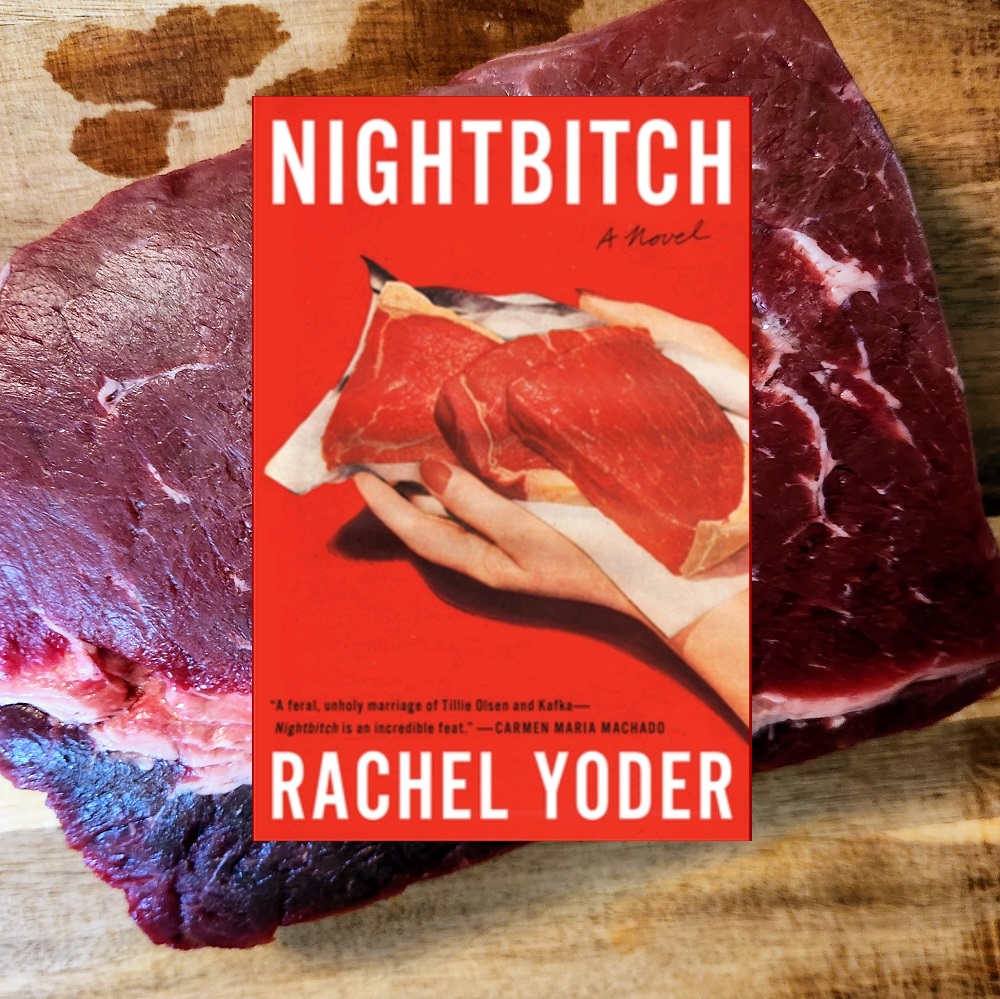
I first heard about Nightbitch on a podcast, though I don’t remember which one. All I know is that it was a short read about a woman who turns into a dog. Something about that concept really got its fangs into me that day. So I stuck it on my TBR and checked it out from the library app Libby when it came up in my queue recently.

I thought that Nightbitch would be a werewolf story, or maybe something about a raw-meat-eating superhero. It is not either of those things. Nightbitch is part feminist metaphor, part cryptid. I love all of her.

In Rachel Yoder’s 2021 debut novel Nightbitch, a mother is at her wits’ end. With her husband always traveling for work, and no friends to speak of except for the picture-perfect mommies she usually avoids at the park and library, she finds herself overwhelmed by the seemingly endless demands of motherhood. She feels taunted by futile dreams of a good night’s sleep and memories of her art world career that she gave up for…well, this. But one day, something changes. Suddenly she’s not just a mother. She’s something more. Maybe it has something to do with the new patches of hair growing on her feet and the back of her neck, the fanglike sharpness to her teeth, this inexplicable craving for bloody meat. And from amongst all these canine trappings comes an inner voice telling her to break free. Where does this new version of herself, this Nightbitch, fit into an increasingly demanding world of contemporary mommyhood?

Some of the tropes in this book:
Workaholic Husband
Unnamed Protagonist
Modern Fairytale
Burnt Out Mom
Transformation
My Instincts are Showing

I loved the honesty and vulnerability in this story. I loved how parts of it are so beautiful, while other parts are quite graphic. I loved the way it rips on MLMs while being compassionate to the women in them, and how relatable it is overall. And then on top of all that, the thing has this fairytale cadence that ends up being charming once you get used to it—I initially didn’t care for an unnamed main character and the omission of quotation marks, but it stopped bothering me pretty quickly once I was hooked by the story.

The mother/Nightbitch as a character was a treat to read. She is sympathetic and flawed, and it’s impossible to resist rooting for her even during parts when her shapeshifting causes her to make poor decisions. She feels like a fully-realized person and it’s easy to become immersed in her tale.

There are many plot threads that I wish received a little more attention—little interesting tidbits that always seem like they could be something and then never really get there. I’m talking about things like the true identity of Wanda White, or what the deal is with those three dogs that keep showing up, or what happens to the mom who disappears into the cornfield during the MLM party. Even the whole arc with her husband being away and distant all the time gets resolved rather ambiguously. These are all tantalizing trails I hoped the plot would follow through with, but Yoder abandons them in favor of long, florid lists of things Nightbitch has to do or wishes she could be doing. In this, I think this book must be trying to evoke authentic feelings of being a mother—you can’t just live your life and follow the interesting plot threads, there is annoying shit here that needs your attention.

By the way, if you are bothered by violence toward animals, skip this book. It’s not a huge part of the story, but Nightbitch definitely does rip apart some small cute animals like a dog would do. There is one particular scene in which the killing is described in graphic, visceral detail.

I also wondered: Where are Nightbitch’s neighbors during all the events of this book? They never seem to be around while she’s being undressed by a pack of free-roaming dogs, running around the neighborhood naked on all fours, or hunting down and killing small urban mammals with her bare hands. That right there is the most fairytale thing about this story: surely someone would have called the cops.

Complaints aside, though, I see Nightbitch sticking with me. I’m sure I’ll be re-reading it in the future. There is something comforting in the humanity and triumph of Nightbitch herself. By becoming doglike, she throws off the shackling expectations of society and the patriarchy. She gains a confidence in her feminine instincts and discovers mom nirvana through embracing her canine side. The whole metaphor is pretty unsubtle, which seems to be a sticking point with some critics of this book. However, subtlety isn’t always necessary to an effective metaphor, and this one did the job for me.

Rachel Yoder’s Nightbitch gets a 4 star rating from me. While I think the plot could have been meatier, I really really liked it as a work of great humor and emotional vulnerability. Any woman, and especially any mother, will be hard-pressed to not see herself somewhere in this modern fairytale.

Review: The Witching Hour by Anne Rice

10 Sunday Sep 2023

Posted by Mallory F in Reviews

≈ Leave a comment

Tags

anne rice, books, fiction, horror, literature, Reviews, sex, witches

Rating: ⭐⭐⭐⭐💫

I just finished Anne Rice’s expansive 1990 novel The Witching Hour, or as I like to call it, Sexghost: A Southern Gothic.

I tried and failed to read this book when I was seventeen. After having read the first three books of The Vampire Chronicles, to say I was obsessed would have been be a gross understatement. Rice pulled me into this darkly beautiful world of sexy immortals who had lots of adventures and inner turmoil. I wanted to be one of them so badly! So I went into The Witching Hour looking for more of that sort of feeling.

This novel, which gives an exhaustive description of each character’s entire life experience before much of anything plot-related happens, was not it. I got a little over a hundred pages in, then summer ended and I’m pretty sure I just left the book at my grandparents’ beach house.

Anne Rice ended up back on my radar recently, probably because of a podcast, so I figured it was time to give The Witching Hour another whirl. I did make it through to the end, though it felt like a slog at times. I’m really glad that I powered through, though, because this is a gorgeously crafted, luscious work of horror that deserves your time.

At a decaying house in New Orleans, an old woman sits on the porch. Both—the house as well as the woman—are rumored to be haunted. Across the continent in San Francisco bay, clairvoyant surgeon Rowan Mayfair rescues a man from the ocean. He returns to life with the power to see into the past of any object he touches. They’ll soon discover that their lives are already intertwined in extraordinary ways. In Anne Rice’s epic saga The Witching Hour, Rowan and Michael journey back to their home town of New Orleans to learn of the Mayfair legacy and how it’s connected to their destiny. This rich and artful history of the powerful Mayfair witch family tells a tale of forbidden romance, corruption, and an unbreakable pact with a supernatural force. Will Rowan’s powers be enough to save her from being consumed by her family’s past?

Some of the tropes in this book:
Bad Powers, Good People
Good Powers, Bad People
13 Is Unlucky
Tangled Family Tree
Switching POV
I Just Want To Be Normal
Medicate the Medium
Psychic Powers
Superior Successor
Powerful family

I’m really glad I experienced this book mostly in audiobook format. I have a hardback copy as well, and I read from that here and there, but mostly I listened to The Witching Hour on my earbuds. That was the right way to do it. While Rice’s imagery is vivid and haunting, the characters layered, and the plot built on a strong foundation of in-world history, that plot takes a REALLY REALLY LONG TIME to get moving. You have to put in a lot of time on that backstory. It was nice, then, to passively cruise through those parts while I went about my day taking care of my responsibilities.

Rice’s gorgeous prose is the saving grace of this work. It is rich and deep, like a decadent high-end dessert. When she describes the First Street house rotting in the New Orleans humidity, she engages every sense so that you swear you can feel the suffocating heat and smell the flowers growing wild in the neglected gardens there. Each chapter feels like a setpiece you could almost walk through.

And speaking of the house, it’s possible that I enjoyed reading about the house more than any of the actual characters (and I enjoyed the majority of the characters quite a bit). In a way, this book is like a really long, dark episode of Extreme Makeover: Home Edition. Early in the novel, we learn that the protagonist Michael enjoys “house movies,” films in which a grand old house figures prominently . This is definitely a house book.

One way The Witching Hour stands out as surprisingly progressive is in its portrayal of a lead female character with sexual agency, who really knows what she wants and voices it frankly. I like Rowan as a character quite a bit—even though the sex ghost stuff gets pretty bizarre there toward the end. We get it, Anne, you’re a kinky bitch.

On that note, there is a whole heap of problematic sex stuff in this novel. From incest that makes the Targaryens look like the Brady Bunch, to statuatory rape, to incredibly mind-boggling things I can’t mention for spoilers, The Witching Hour is filled with it. Rice did not shy away from sexual horror. Anyone who finds themselves upset by that brand of terror will not be into this book.

I was a bit bothered by the fact that, despite this book being set mostly in New Orleans, no black characters were developed in any meaningful way. The ones that do appear are either servants or just there to be atmospheric—like when Michael is walking through his childhood neighborhood noticing how rundown it’s become, and he realizes that no white people live in the area anymore. Some may argue that that’s likely accurate to New Orleans in the late 80s, but even if that’s the case, ouch. BIPOC representation wasn’t encouraged in fiction back then the way it is now, but still, I’m disappointed that Rice had the opportunity and didn’t take it.

Last gripe: Michael didn’t really need to put any effort into looking for answers, did he? Fortunately for him, Aaron is there to function as the Exposition Fairy, literally handing Michael the “How We Got Here” of it all in the form of a file on the Mayfair family. Rice doesn’t summarize the contents of this file from Michael’s point of view, oh no, she slaps the entirety of the file right into the middle of this book. It was already both dense and lengthy, but Rice made a decision between the main plot and dedicating space to the immensely detailed family history. Choosing to go for the history feels a little self-indulgent.

But then again, I can’t argue with the results. I was absolutely riveted by the time, 45 hours into the audiobook, that Lasher and Rowan were finally together in the same room having a conversation. There was so much buildup getting to that point, so many agonizing hours of varying eyewitness accounts and achingly detailed descriptions of everything. Somehow, though, Rice was able to summon with her beautiful voice a level of dramatic, disturbing horror that made the journey feel worth it. I felt well-rewarded for my time.

The Witching Hour by Anne Rice gets 4.5 stars from me. She took this story to some truly bold, horrifying places. I can’t count the number of times I muttered “what the fuck” out loud to myself while listening to it. It is dense and lush, and sometimes you’re just trucking along enjoying the scenery when SNAP! something darts out to bite you, and you’re like, “oh my god Anne Rice, what did you just do to me?” And while the novel could have benefitted from some abridging of the voluminous Mayfair family history in favor of the main plot, the result by the end was so enjoyable to me as a horror fan that I almost feel bad taking half a star away.

What are your thoughts on this book, or on Anne Rice as an author? Chat with me in the comments!

6 Public Domain Horror Novels You Can Read for Free Right Now

03 Sunday Sep 2023

Posted by Mallory F in Listicles

≈ Leave a comment

Tags

books, classics, fiction, horror, literature, public domain

If you’re always chasing the next good scare, then you know what a dent that horror habit can put in your book budget. But it doesn’t always have to! Because we’ve been enchanted with scaring ourselves and each other for millennia, there are plenty of eerie tales out there in the public domain, just waiting to find a new home inside your brain. Read on for a list of legendary spine-chillers that you can find for free online whenever you want.

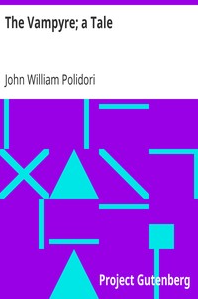
The Vampyre

Read The Vampyre free through Project Gutenberg

Conceived at the same Lake Geneva retreat where Mary Shelley famously penned Frankenstein, The Vampyre has the distinction of being the first English vampire story ever published — pre-dating Dracula by over 70 years. This tale written by Dr. John Polidori follows the independently wealthy gentleman Aubrey as he becomes acquainted, and travels around Europe, with the mysterious Lord Ruthven. As the nobleman’s debauchery escalates, Aubrey begins to understand that there may be a supernatural predator hiding behind Ruthven’s morose playboy façade.

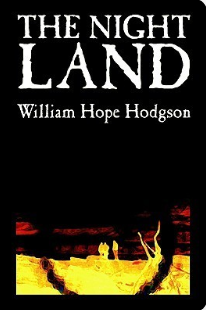
The Night Land

Read The Night Land free through Project Gutenberg

You are on Earth in the far future. The sun is dead, and the remnants of humanity all live together in a giant metal pyramid. No one can go outside, as that would mean facing the inhuman (in some cases formerly human) monsters that live out there in the dark, waiting for the last of Earth’s volcanic energy to run itself out so that they might claim man’s last bastion for the darkness. This is the setup for William Hope Hodgson’s 1912 novel The Night Land, a work of fantastical horror that H.P. Lovecraft deemed unforgettable (if somewhat verbose) in its dark, macabre imagery. This somber future landscape is so captivating and influential that over a century later, writers are still churning out tales set in Hodgson’s haunting Night Land.

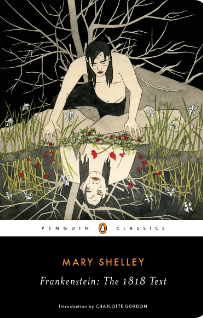
Frankenstein

Read Frankenstein free through Standard Ebooks

One of the most famous novels of the 19th century, Frankenstein was written while western Europe was experiencing a renaissance in the sciences, with new and seemingly groundbreaking discoveries being made practically every day. But what if one of those ambitious doctors decided to take on the ultimate villain: death? That’s the question that Mary Shelley, the mother of science fiction, explores in her heartbreaking and bone-chilling gothic tale of an ambitious medical student who must learn to face the consequences of his curiosity.

The Mysteries of Udolpho

Read The Mysteries of Udolpho free through Global Grey Ebooks

Love a dark romance set in a crumbling castle? How about forbidden love, fallen nobility and grand journeys through picturesque European vistas? If that sounds like your vibe, then Ann Radcliffe’s The Mysteries of Udolpho ticks all the boxes. This genre-defining late 18th century gothic novel follows Emily St. Aubert as she’s forced to move in with her aunt and her aunt’s shifty new husband to a remote castle in Northern Italy. Separated from her true love and fending off unwanted advances from a disgraced count, Emily’s life spirals into terror as she struggles to separate the ghosts that haunt the castle from those haunting her soul.

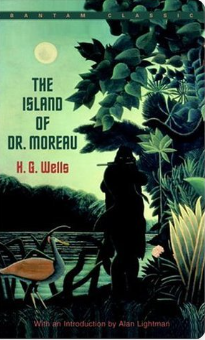
The Island of Doctor Moreau

Read The Island of Dr. Moreau free through Planet Ebook

You’ve never had a tropical island getaway like this. H.G. Wells explores what it would be like to be stranded in the South Pacific with a mad scientist and his creations in this extraordinarily dark 1896 sci-fi novel. It follows in the footsteps of Shelley, dealing with themes of playing god and what it means to be human, and building on them to probe at the ethical controversies surrounding late 19th century advances in science and medicine. Filled with bizarre monstrous humanoids and a sense of foreboding that settles in almost immediately and slowly builds, this surprisingly short work is a densely-packed grotesquerie that asks the still-timely question: Just because science can, does that mean it should?

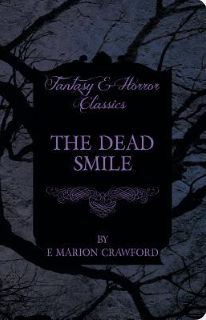
The Dead Smile

Read “The Dead Smile” free through Digital Eel

Picture a grin that is so infectious, so evil in its stubborn persistence, that it lives on through generations. That’s the inspiration for “The Dead Smile,” Francis Marion Crawford’s masterful tale of a banshee, a vindictive corpse and a forbidden love. This short work of horror is perfect for the reader who loves poring over gorgeous prose while getting the creeps. Forty-four pages of concentrated poetic dread, this blood-chilling novella is quite potent in its ability to horrify as it delivers repeated gut-punches of shock and fear.

Any of these classics is your perfect companion for a stay at a cabin in the woods, or a dark, stormy night—and they don’t cost a cent. Be sure to light a fire (or turn on a space heater) to warm you while these dark tales chill your soul.

Do you have recommendations for public domain works of horror that aren’t mentioned here? Let me know so I can add them to my list!

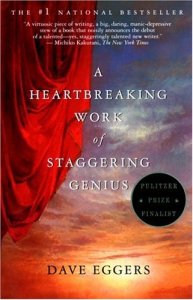
A Heartbreaking Work of Staggering Genius by Dave Eggers

24 Tuesday Feb 2015

Posted by Mallory F in Reviews

≈ Leave a comment

Tags

literature, nonfiction, Pushing 30 Reading Challenge, Reviews

tumblr_l7tef8fihn1qaouh8o1_400As I’m sure it was designed to do, the title of this book caught my eye. It stood out among the myriad titles on the reading list, written in pink ink on notebook paper, that I have tacked up in my cubicle. A heartbreaking work, it claimed to be, not just of regular, run-of-the-mill genius, but of staggering genius. I had no idea what it was about, just that the title made it out to be something amazing. But “heartbreaking” and “staggering genius” can describe a lot of genres. Was it a transcendent romance for the ages? Was it a tale of atrocious abuse and neglect overcome by unwavering optimism? Did it follow the lives and trials of the sentient roundworms inhabiting a planet in the Mintaka solar system? Whatever it was, I was ready to be forever changed by reading it.
Turns out that it’s a memoir. Sort of. It covers actual events that happened in Eggers’ life — the loss of his parents to cancer, becoming the guardian to his younger brother, their move to San Francisco — but it’s clear that the author has exaggerated or fictionalized certain parts of the story. Dave chronicles his (often feeble) struggles to have an impact on the world, balancing his ambition with his new parental responsibilities. It is a blend of humor, philosophy and self-reference that makes for a compelling read.

Having finished it, I can definitively say that I don’t know what to make of this book. On the one hand, it was beautifully written. Eggers shows a prodigious command of the English language, and his writing is a true pleasure to read. The narrator speaks intimately to the reader, as if confiding in a friend — a mix of gritty truths, ridiculous exaggerations and deep personal insights. By the end, I felt like he was someone I knew.

On the other hand, the fact/fiction blend blurred the storyline and sometimes made it difficult to follow. Eggers often exaggerates events or dialogue or makes them up. Which is cool. The book does not claim to be completely true, and sometimes alludes to the fact that certain parts are indeed made up. This creates an interesting reader-narrator relationship. The reader recognizes that the narrator is unreliable, but the narrator admits that he is unreliable, so that, I guess, makes him reliable in his unreliability? If that sentence is confusing, then you’ve gotten a taste of how I felt the whole time I was reading.

Eggers often takes breaks from exposition in order to wax poetic on subjects such as his (or his character’s) personal insecurities and where to draw the line between personal and public life. It’s all very honest and self-referential, but can seem a bit masturbatory at times. The book is very self-aware, admitting its self-awareness, and then admitting the admission of its self-awareness. It got (for me) tiresome after a while. I get it, dude. You’re so meta it’s killing me.

So while I enjoyed reading A Heartbreaking Work of Staggering Genius, it was not the life-changing experience I expected from the title. Was it heartbreaking? Not particularly. The characters were appropriately tragic and identifiable, but never vulnerable enough to elicit an emotional response anywhere close to “heartbreaking”. Is Dave Eggers a genius? It’s very possible. His writing is very good. That writing an entire book which basically screams “recognize me for my genius!” won him a bunch of awards is pretty genius in and of itself. But I’m not entirely sure I buy it.

White Teeth by Zadie Smith

14 Wednesday Jan 2015

Posted by Mallory F in Reviews

≈ Leave a comment

Tags

books, literature, Pushing 30 Reading Challenge, race, religion, Reviews

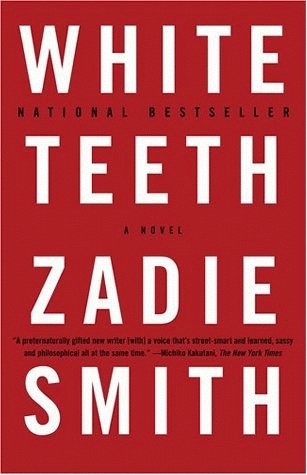
3711Zadie Smith, I should start out by saying, is a good author. A really good author. I was skeptical reading the first couple chapters of this book, which follows characters so unlikely, so far from the archetypal “everyman,” that I didn’t think I could find their stories interesting at all — people so dramatically removed from my demographic that I wasn’t sure there was anything I could gain from reading about them. I was proven wrong; I did become quite interested, enough so that I came back late from several lunch breaks, frustrated that I didn’t have time to stay and see the characters through to the end.

White Teeth is about a lot of people living in late 20th-century England. First it’s about Archie Jones, a painfully average man and World War 2 veteran, whose suicide attempt is averted by what he sees as forces of fate. It’s about his young wife Clara, a former Jehovah’s Witness from Jamaica with a desire to leave her roots behind. It is about his best friend and army comrade Samad Iqbal, a pious Muslim and former intellectual, disappointed in his own inability to leave a mark on the world. It’s also about the children of these people, Samad’s twins Magid and Millat, and Archie and Clara’s daughter Irie. The second half of the book in particular deals with the dreams and struggles of these young people. The book is about identity — what does it mean to be Jamaican? Bengali? Mixed-race? Muslim? English? Or any combination of these things? Which of these identities should be first, and why is it shameful to believe otherwise? It’s about duty to one’s family, one’s country, one’s religion. This novel covers a lot of ground and it does a beautiful job, weaving the lives, dreams and tribulations of its characters together with magnificent and engaging prose.

That said, I felt thoroughly blue-balled by this novel. Such a gorgeously-crafted story that spans demographics and generations, I thought, must have an equally beautiful ending. I wanted to get there, to find out the final destination of this captivating journey. However, I felt like I’d made a cross-country trip to Disneyland, only to be met by a “closed for renovations” sign. Or maybe it’s more like establishing a long and fulfilling pen-and-paper relationship with a penpal and right before you’re about to meet for the first time, you get a letter from his mother saying that you won’t be hearing from him anymore with no further explanation. Maybe I should stop trying to come up with similes.

I certainly can’t presume to tell anyone how to write. I need tips myself. And Zadie Smith is undoubtedly a million times better at it than I am. I do happen to be a pretty avid reader, though, and as such I’ve developed certain expectations from a novel. Is it horrible if those expectations are shattered now and then? No, in fact sometimes it’s really good. But at the bare minimum I expect a story to have a goal. And I can’t for the life of me figure out what the goal of this novel was. In fact, the last page and a half pretty much says to the reader, “I bet you want to know what happens. Fuck off, this story doesn’t work that way.” There is a climax of sorts, but no resolution.

So I have to wonder, what story were you trying to tell, Zadie? All these characters who I’ve come to care about are brought together, all the energy of their conflicts coming to a head at one pinnacle event, and then the story ends. It seems like a self-indulgent “fuck you” to the reader. And why write a novel if that’s where you want to go with it? I’m really baffled and disappointed.

I know, the destination doesn’t matter as much as the ride. And that seems to be the “moral” of the whole book — that the destination is never the utopia we imagine it to be, and real life doesn’t always have resolution. But I think it does matter, and I think that such a great story at least deserves a decent resolution. Maybe I’m being too entitled as a reader, but a lifetime of escapist reading has given me that expectation. I feel cheated.

Read this if you enjoy great character development and superior prose, but definitely don’t expect any payoff at the end. If the destination doesn’t matter, if the ride itself is good enough for you, then this might be your novel.

What She Saw… by Lucinda Rosenfeld

07 Wednesday Jan 2015

Posted by Mallory F in Reviews

≈ Leave a comment

Tags

depression, literature, Pushing 30 Reading Challenge, relationships, Reviews, sex

105778I was misled by the seemingly ominous ellipsis in the title of this book. It annoyed me that it was there, mainly because I interpreted it as ominous in the first place. I took it as “She has seen some shit,” with the ellipsis meant to emphasize that it was some serious shit. I envisioned a gritty novel about a promising young girl suffering sexual abuse and coping with its consequences as she came of age. Taken that way, I thought it was completely unnecessary. That’s not how one uses an ellipsis. It continued to bug me as the book sat on my kitchen counter waiting to be read. The title would just feel so much better without that punctuation hanging there.

I guess I gave the author too little credit, because the ellipsis made a lot more sense once I actually opened the book. It was about a girl/young woman’s (non-abusive) relationships with men. The title corresponses to the chapter names so that, together, they read “What she saw…in [guy’s name].” Okay, that works. It made me feel a little better. Now I could get on with my reading in relative peace.

What She Saw… follows Phoebe Fine from middle school to her mid-twenties, and mostly deals with her relationships across this time period. An intelligent girl with a gift for language and the violin, it seems like she has a bright future ahead of her. But beneath her privledged upbringing and educated mannerisms lurks naivete and a host of self-image issues that lead her down a destructive path as she looks to a series of questionable male influences to validate her as a person. In a tale of middle-class dreams gone wrong, Phoebe’s story is often funny, sometimes sad and sometimes cringeworthy.

As a character, Phoebe seems to have a lot of issues for someone so average. Her parents are musicians and lovers of classical music, but still manage to send their children to a prestigious prep school. She takes on multiple extracurricular activities, has a penpal and gets her parents to drive her to the roller rink on the weekends. However, it seems that, from an early age, Phoebe measures her worth in terms of her relationships with boys. Her female “best friends” play disposable, minor roles, and she has a new one every chapter or so. Where she feels it’s necessary, she tells lies to make herself seem more attractive to prospective dates. In an attempt to remain thin and “attractive,” she develops bulemia. She seems to continually be drawn to the “wrong” guys, from the class clown to the out-of-her-league lacrosse star to the married sociology professor. And whether she actually loves any of these guys is debatable. She seems to achieve every conquest she sets out to make, and those conquests make her feel good. Yet when she finds that the relationships aren’t all that she wishes, she tries to “punish” these men, often by behaving in self-destructive ways.

So what happened? What wires got crossed, damaging Phoebe to the point of being unable to maintain a healthy relationship with herself or others? Phoebe’s sister, who has a very minor role in the novel, seems to play a big part in Phoebe’s constant need for validation. She’s mentioned only a few times, briefly, but it’s always in the context of Phoebe’s resentment toward her success — her ivy-league degree, her successful career, her fantastic marriage. Phoebe perceives her parents’ disappointment in their younger daughter, even though they never voice it. Never feeling that she can measure up, she seeks approval from the opposite sex, because if she can’t be successful then at least she can be lusted after.

But does she grow over the course of the novel? It’s not really clear. At the end, it almost seems like she’s achieved a sort of experienced wisdom about relationships. But since it ends on a new beginning, the reader can’t really be sure if this is the start of something better and more fulfilling for Phoebe, or if it’s the entrance to a road that leads to more of the same. It leaves the reader hopeful, I suppose, but it doesn’t feel like any resolution has been reached.

Prose-wise, I thought that What She Saw… was done very well. Rosenfeld’s language was natural and captivating, and that’s mainly what kept me reading this book. Phoebe’s character was pretty unnerving at times, but the story was written well enough that I decided to stick around to see what she did next. Was it worth it? I don’t really know. This is one of those books that I don’t feel I can form a strong opinion about. My feelings on this novel extend to, “Yep, I sure did read it.”

Was it a valuable read for someone in their twenties? I suppose it shows that people’s mistakes don’t have to define them. People can change. People can grow up. For some of us, it takes a little longer. It also shows the dangers of placing too much emphasis on what others think — when you base your sense of self-worth on the opinions of others, you’re going to have a bad time. Maybe I wasn’t too thrilled with this read because these are things I feel I’ve already learned.

And for what it’s worth, I would have chosen a title without an ellipsis.

Pushing 30 Reading Challenge (Part II): The Emperor’s Children

18 Thursday Dec 2014

Posted by Mallory F in Reviews

≈ Leave a comment

Tags

9/11, books, literature, Pushing 30 Reading Challenge, Reviews

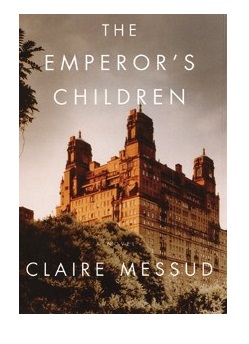
The_Emperor's_Children_book_coverComing off of reading His Dark Materials, I was a little angry when I started reading this book. I didn’t want to read about REAL people, I wanted to stay in my fantasy world of moral black and white. I found it so jarring to switch from a story with characters so lovable and blameless to a realistic fiction piece about obviously flawed people operating in moral gray areas. So I began reading The Emperor’s Children in the lobby of a Hyundai dealership (I happened to be getting an oil change that day) with a really pessimistic attitude.

This novel is mainly about three friends in their early thirties (and one chunky, awkward college-age boy) and their attempts to do something meaningful with their lives, mostly in terms of romance or career. They all live in New York. They all think all of the others have “issues”. None of these characters is particularly likable. Marina, who promises she’ll one day finish her book about how children’s clothes reflect social issues, is the daughter of a celebrated journalist. Danielle is a documentary film producer who seems to be sensible about everything except love. Julius is a freelance reviewer who is desperately trying to throw off his rural Michigan roots and live a more extravagant lifestyle than his writing can really pay for. Marina’s unfortunately-named younger cousin, Frederick “Bootie” Tubb, fancies himself an intellectual beyond his years and moves to New York hoping to find a like-minded mentor in his successful uncle. These four find that their best-laid plans don’t tend to work out quite like they’d hoped. This novel is also loosely about 9/11, which blindsides everyone near the end of the book (spoiler? Though in a book about early-00s NYC, what else is it going to be about?), making all their struggles and wishes seem petty and irrelevant. Yeah, this book seemed like it was going to be a bit of a downer.

During the first chapter, which follows Danielle as she muddles through a dinner party while inwardly scoffing at all the other attendees, I decided that I wasn’t in the mood for this kind of book. The judgmental attitude, cynical inner voice and forced interest that Danielle presented at the beginning of the book — well, it perhaps hit a little too close to home for my liking. But realizing that was probably the reason I kept on reading.

It didn’t help my optimism when I discovered that the sentence structure was often extremely convoluted. All the commas and nested statements, sometimes going for half a page before encountering a single period, was really unnerving at first. You give me characters with false facades and scathing inner monologue thinly concealing their own self-loathing AND ridiculously longwinded run-on sentences on top of that? If I hadn’t been stuck at the dealership for an hour and a half, I would have given up in the first chapter. But I was surprised at how quickly I got used to the writing style. I by the third chapter in, I didn’t even blink at a half-page sentence.

Despite my initial cynicism, though, The Emperor’s Children managed to change my mind. I began to feel for the characters and their struggles, even if I didn’t agree with their decisions (and there were a lot of parts during which I shouted at the page something akin to “WHY WOULD YOU DO THAT?” — in my head, of course, I don’t typically emote to the level of screaming at inanimate objects). It’s a credit to the author that she could make me sympathize with each and every character in the book, even Marina, who I found particularly irritating. I saw a bit of myself in Bootie whose ridiculous self-righteousness was only apparent to himself in retrospect, and in Julius who couldn’t seem to reconcile his desire for a committed relationship with his distaste for stagnancy. There’s this expectation that a person should have their life figured out by thirty, and admitting that you don’t — that you’re faking it just as much as you were in high school — is tough to do. I could sympathize with that, even if I didn’t exactly agree with the characters’ ways of dealing with that difficulty. By the end they all seem to reach, if not a resolution, then an uneasy peace with their respective situations. In the face of a terrorist attack, certain pills just seem easier to swallow. Pretty much everyone’s arc ends with a spark of hope in the face of personal tragedy.

Will I ever re-read this book? Probably not. It was a little too depressing, and I’m a sucker for a happy ending. I think it’s an insightful look into quarter-life crisis — which appears to be becoming more of a thing for millenials who are spending more years living at home and maybe not having such a good time coping with that. The Emperor’s Children shows that maybe some of us adults are not as well-adjusted as people think we are (or as we’d like others to think we are). That can be a tough truth to come to terms with, which is maybe why this wasn’t the most fun read for me. But it also shows that it’s never too late to turn things around.

Pride and Prejudice by Jane Austen

14 Thursday Jan 2010

Posted by Mallory F in Reviews

≈ 1 Comment

Tags

books, literature, Reviews, romance

Pride and Prejudice by Jane Austen

Pride and Prejudice by Jane Austen

Pride and Prejudice — the original literary chick flick.  I’m a little bit ashamed that, though I claim to be well-read, it’s only just now that I’ve gotten around to reading it.  It seems like one of those classic novels that a girl has to read at least once in her life.  I wasn’t going to post a review for it, because it’s been around so long and is referenced so much that it seems a little redundant.  I do want to record my thoughts on it, though–and, really, what’s a review besides exactly that?

I will say, I was a little frustrated about having to go on Wikipedia and look up a synopsis.  The book jacket on my copy said a lot about it being “a timeless classic,” and “beloved by generations,”  but it didn’t tell me what the story was actually about.  Maybe I’m lame for not already knowing, but all the prior knowledge I had of it was from lit majors mentally creaming themselves over Mr. Darcy.  And I do like to have a rough idea of what is going to happen in a book before I read it.

Pretty much, you have the Bennets.  They have five daughters who they are trying to marry off, and wouldn’t you know it, a rich and handsome bachelor (Mr. Bingley) happens to move in down the road from them.  He quickly becomes enamoured of the oldest daughter, Jane.  His friend, Mr. Darcy, is an even more handsome and rich bachelor, but everyone decides pretty fast that he’s a total prick.  He’s so much of a prick that he falls in love with Elizabeth Bennet, but decides that her family is too podunk for him, and so bundles Mr. Bingley off to London with the reassurance that Jane isn’t that into him, anyway.  When Mr. Darcy finally does come around and propose to Elizabeth, she naturally tells him to get fucked by the horse he rode in on.  Unfortunately, it won’t take long for her to figure out that he’s actually a pretty rad dude, and turning him down may have been the biggest mistake of her life.

Also, there’s a clergyman named Mr. Collins who’s a total tool.

Forest can tell you that I have very little patience for books that I can’t basically speed-read.  So, pretty much, anything pre-1900 or written by William S. Burroughs is out of the question for me.  Or it’ll take me forever to get through it because I konk out ten pages in (sorry Jane Eyre, I love you, but you took me six months to read).  But Pride and Prejudice was unexpectedly easy.  I read the bulk of it in just two sittings, and even found myself adopting the language style a bit when I’d break to talk to someone.

I can see why this story has appealed to girls through multiple generations.  Isn’t that just what we all want, to be pursued by the handsome bad boy, and for him to be so hurt by our rejection that he totally changes his act and becomes basically the perfect guy?  Oh, and you think that men and women play games now?  Nineteenth century courtship:  because it’s inappropriate to openly discuss your feelings, you have to rely on subtle manners and body language to convey your interest or lack thereof.  And even if you don’t like the guy, he’ll probably propose to you anyway.  At least, that’s the way it plays out in Pride and Prejudice.

Would read again.

The Bell Jar by Sylvia Plath

31 Friday Jul 2009

Posted by Mallory F in Reviews

≈ 3 Comments

Tags

books, depression, literature, Reviews

The Bell Jar by Sylvia Plath

The Bell Jar by Sylvia Plath

I spent a while–probably a year or so–being quite intrigued by Sylvia Plath before I finally picked up this book.  If you don’t know, Plath was a prominent poet in the 1950’s/60’s.  She was married to Ted Hughes, and had a history of depression.  (I’d probably be depressed, too, if I was married to Ted Hughes.  Have you seen that guy?)  In 1963 she published The Bell Jar, a semi-autobiographical novel.  Three weeks later, she stuck her head in an oven.  Like so many suffering artists, she gained more fame in death than she ever had while alive–in 1982, she won the Pulitzer Prize for The Collected Poems.

The Bell Jar is narrated by Esther Greenwood, a Smith College student who has won a summer internship at a women’s magazine in New York City.  She quickly discovers that city life isn’t all she’d hoped for, and furthermore that she is far from living up to her own standards.  Esther spirals into suicidal depression, and is institutionalized.  With her loved ones keeping a close eye on her, Esther has to decide if life is worth living.

I had one of my professors tell me that knowledge of poetry will immensely improve one’s prose.  Well, Sylvia Plath was a poet first and foremost, and it definitely shows in her writing.  She uses a lot of metaphor, but manages to do it without being flowery or pretentious.  The bell jar alluded to in the title, for instance, is used as a metaphor for the stagnance that she feels in her life, and the lives of those around her.

I also appreciated how well she was able to make the book flow.  Throughout the book, Plath deviates often from present events to give background stories, and background stories of background stories.  Yet these tangents aren’t distracting.  They fit quite smoothly and naturally into the overall story.

I had mentioned in the first paragraph that this was a semi-autobiographical novel.  Well, they say to write what you know, and Plath did so.  Many events related in the book were inspired by true events in the author’s life.  The internship in New York, her broken leg, her first suicide attempt, and the boyfriend with tuberculosis  were all drawn from Sylvia Plath’s real life.

So the language and imagery were beautifully exectuted.  I found this novel to be nearly flawless.  Yet I wasn’t totally drawn in by the plot.  I kept expecting more dramatic events that were never really delivered.  I can’t say that I was disappointed, because I don’t know what I really expected.  But even with all its good points, I don’t see it being particularly memorable plot-wise.  An example of impeccable writing, yes.  But I wasn’t left thinking about Esther Greenwood for days afterward, as has happened to me with characters in the novels I’ve loved the most.

I think that anyone who is really interested in writing should read this book.  Let Sylvia Plath show you how it’s done.

← Older posts

Pages

  • About Me
  • Reviews
  • Instagram
  • Threads
  • Goodreads

      9/11 80s afterlife amazon anne rice asian lit A Song of Ice and Fire book-review book-reviews books classics comedy depression experimental fiction fantasy fiction florida free Game of Thrones gothic grady hendrix graphic design historical fiction horror humor isabel-canas king arthur literature manga memoir motherhood murder mystery mythology nonfiction novellas nuclear Palahniuk public domain Pushing 30 Reading Challenge race relationships religion Reviews rl stine romance sci-fi sex shapeshifting slasher southern gothic stephen graham jones stephen king suspense thriller true crime twilight vampires video games wicked witches YA horror

      Blog at WordPress.com.

      • Subscribe Subscribed
        • Adequate Squatch Presents
        • Already have a WordPress.com account? Log in now.
        • Adequate Squatch Presents
        • Subscribe Subscribed
        • Sign up
        • Log in
        • Report this content
        • View site in Reader
        • Manage subscriptions
        • Collapse this bar
       

      Loading Comments...