

Rating: ⭐⭐⭐⭐💫
I just finished Anne Rice’s expansive 1990 novel The Witching Hour, or as I like to call it, Sexghost: A Southern Gothic.
I tried and failed to read this book when I was seventeen. After having read the first three books of The Vampire Chronicles, to say I was obsessed would have been be a gross understatement. Rice pulled me into this darkly beautiful world of sexy immortals who had lots of adventures and inner turmoil. I wanted to be one of them so badly! So I went into The Witching Hour looking for more of that sort of feeling.
This novel, which gives an exhaustive description of each character’s entire life experience before much of anything plot-related happens, was not it. I got a little over a hundred pages in, then summer ended and I’m pretty sure I just left the book at my grandparents’ beach house.
Anne Rice ended up back on my radar recently, probably because of a podcast, so I figured it was time to give The Witching Hour another whirl. I did make it through to the end, though it felt like a slog at times. I’m really glad that I powered through, though, because this is a gorgeously crafted, luscious work of horror that deserves your time.
At a decaying house in New Orleans, an old woman sits on the porch. Both—the house as well as the woman—are rumored to be haunted. Across the continent in San Francisco bay, clairvoyant surgeon Rowan Mayfair rescues a man from the ocean. He returns to life with the power to see into the past of any object he touches. They’ll soon discover that their lives are already intertwined in extraordinary ways. In Anne Rice’s epic saga The Witching Hour, Rowan and Michael journey back to their home town of New Orleans to learn of the Mayfair legacy and how it’s connected to their destiny. This rich and artful history of the powerful Mayfair witch family tells a tale of forbidden romance, corruption, and an unbreakable pact with a supernatural force. Will Rowan’s powers be enough to save her from being consumed by her family’s past?
Some of the tropes in this book:
Bad Powers, Good People
Good Powers, Bad People
13 Is Unlucky
Tangled Family Tree
Switching POV
I Just Want To Be Normal
Medicate the Medium
Psychic Powers
Superior Successor
Powerful family
I’m really glad I experienced this book mostly in audiobook format. I have a hardback copy as well, and I read from that here and there, but mostly I listened to The Witching Hour on my earbuds. That was the right way to do it. While Rice’s imagery is vivid and haunting, the characters layered, and the plot built on a strong foundation of in-world history, that plot takes a REALLY REALLY LONG TIME to get moving. You have to put in a lot of time on that backstory. It was nice, then, to passively cruise through those parts while I went about my day taking care of my responsibilities.
Rice’s gorgeous prose is the saving grace of this work. It is rich and deep, like a decadent high-end dessert. When she describes the First Street house rotting in the New Orleans humidity, she engages every sense so that you swear you can feel the suffocating heat and smell the flowers growing wild in the neglected gardens there. Each chapter feels like a setpiece you could almost walk through.
And speaking of the house, it’s possible that I enjoyed reading about the house more than any of the actual characters (and I enjoyed the majority of the characters quite a bit). In a way, this book is like a really long, dark episode of Extreme Makeover: Home Edition. Early in the novel, we learn that the protagonist Michael enjoys “house movies,” films in which a grand old house figures prominently . This is definitely a house book.
One way The Witching Hour stands out as surprisingly progressive is in its portrayal of a lead female character with sexual agency, who really knows what she wants and voices it frankly. I like Rowan as a character quite a bit—even though the sex ghost stuff gets pretty bizarre there toward the end. We get it, Anne, you’re a kinky bitch.
On that note, there is a whole heap of problematic sex stuff in this novel. From incest that makes the Targaryens look like the Brady Bunch, to statuatory rape, to incredibly mind-boggling things I can’t mention for spoilers, The Witching Hour is filled with it. Rice did not shy away from sexual horror. Anyone who finds themselves upset by that brand of terror will not be into this book.
I was a bit bothered by the fact that, despite this book being set mostly in New Orleans, no black characters were developed in any meaningful way. The ones that do appear are either servants or just there to be atmospheric—like when Michael is walking through his childhood neighborhood noticing how rundown it’s become, and he realizes that no white people live in the area anymore. Some may argue that that’s likely accurate to New Orleans in the late 80s, but even if that’s the case, ouch. BIPOC representation wasn’t encouraged in fiction back then the way it is now, but still, I’m disappointed that Rice had the opportunity and didn’t take it.
Last gripe: Michael didn’t really need to put any effort into looking for answers, did he? Fortunately for him, Aaron is there to function as the Exposition Fairy, literally handing Michael the “How We Got Here” of it all in the form of a file on the Mayfair family. Rice doesn’t summarize the contents of this file from Michael’s point of view, oh no, she slaps the entirety of the file right into the middle of this book. It was already both dense and lengthy, but Rice made a decision between the main plot and dedicating space to the immensely detailed family history. Choosing to go for the history feels a little self-indulgent.
But then again, I can’t argue with the results. I was absolutely riveted by the time, 45 hours into the audiobook, that Lasher and Rowan were finally together in the same room having a conversation. There was so much buildup getting to that point, so many agonizing hours of varying eyewitness accounts and achingly detailed descriptions of everything. Somehow, though, Rice was able to summon with her beautiful voice a level of dramatic, disturbing horror that made the journey feel worth it. I felt well-rewarded for my time.
The Witching Hour by Anne Rice gets 4.5 stars from me. She took this story to some truly bold, horrifying places. I can’t count the number of times I muttered “what the fuck” out loud to myself while listening to it. It is dense and lush, and sometimes you’re just trucking along enjoying the scenery when SNAP! something darts out to bite you, and you’re like, “oh my god Anne Rice, what did you just do to me?” And while the novel could have benefitted from some abridging of the voluminous Mayfair family history in favor of the main plot, the result by the end was so enjoyable to me as a horror fan that I almost feel bad taking half a star away.
What are your thoughts on this book, or on Anne Rice as an author? Chat with me in the comments!

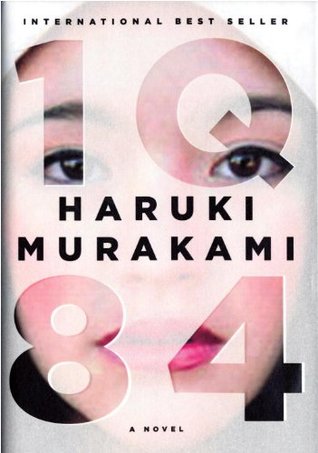 Haruki Murakami’s epic masterpiece 1Q84 had been on my to-read list for nearly a decade. Now that the ‘rona has me staying home a lot more, I figured there was no better time for me to tackle this behemoth. Clocking in at over 1300 pages in the Kindle edition, it’s now officially the longest novel I’ve read (before now, that title was held by the extended edition of Stephen King’s The Stand). After more than two months, I finally finished it. After all that I can say, while it wasn’t without its flaws and frustrations, I enjoyed this book a lot and am glad I took the time to dive into it.
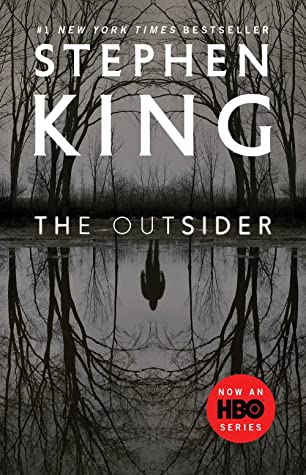 I’ve read Stephen King since I was a teenager, and to me, starting one of his books is like slipping into an old bathrobe–familiar and comforting, with the knowledge that you’re about to have some satisfying relaxation time. Relaxing with a good horror novel is one of my favorite things in the world, and King rarely fails to disappoint. The Outsider was no exception. Though I had some minor gripes, overall I really enjoyed this one, and I’m sure it’ll make it into my rotation of regular Stephen King rereads.
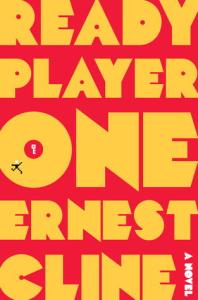 It’s this kind of book that makes me feel like a shitty reader. I appreciate good writing. I absolutely do. I recognize a master when I see him or her. I’ve read some really good authors in the past few months, even if I didn’t necessarily agree with their plot choices. The book I’m reviewing today, Ready Player One by Ernest Cline, was not the best-written novel I’ve read by a long shot. I recognize that. But dammit if it wasn’t fun as hell.
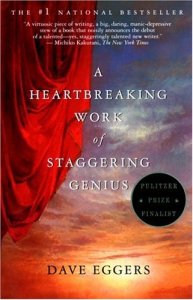 As I’m sure it was designed to do, the title of this book caught my eye. It stood out among the myriad titles on the reading list, written in pink ink on notebook paper, that I have tacked up in my cubicle. A heartbreaking work, it claimed to be, not just of regular, run-of-the-mill genius, but of staggering genius. I had no idea what it was about, just that the title made it out to be something amazing. But “heartbreaking” and “staggering genius” can describe a lot of genres. Was it a transcendent romance for the ages? Was it a tale of atrocious abuse and neglect overcome by unwavering optimism? Did it follow the lives and trials of the sentient roundworms inhabiting a planet in the Mintaka solar system? Whatever it was, I was ready to be forever changed by reading it.
 Adequate Squatch Presents