Vampires of El Norte by Isabel Cañas burst onto the popular book scene last summer with an eye-catching cover and the tantalizing promise of a vampire thriller-romance (thrillmance? can that be the new romantasy?). It’s Cañas’s second novel (following her bestselling 2022 debut The Hacienda), and I was able to squeeze it in as my very last read of 2023. It managed to be a charming and gripping tale I bet many romance fans would enjoy — but it didn’t quite live up to my expectations.
Summary:
Nena and Nestor were inseparable as children — until one night when the two 13 year-olds snuck out to search for buried silver, and Nena was attacked by some sort of savage, spider-limbed creature. Certain that Nena was dead, Nestor fled in fear, staying far away from Nena’s family’s land for over a decade. When he finally returns, ready to fight the looming threat of Anglo invaders, he’s shocked to see Nena alive, warm and…hostile. Seeing Nestor for the first time in ten years, Nena can’t help but be furious. After all, he’d promised never to leave her, and had promptly done just that. But now, with battle looming, they’ll have to deal with what it means to be in each other’s lives again as they work together to survive. It’s not just the horror of war that threatens their future — there is something else, something that sticks to the shadows and nurses a wicked thirst for blood.
***
The shining beacon within Vampires of El Norte is the romance plot, which is very sweet. Nena is the center of Nestor’s life — until he believes her dead. And Nestor is the one person Nena knows she can trust — until he runs away. The tension of their unexpected reunion and gradual reconciliation draws the reader constantly forward. I kept turning the pages because I had to know, do these two ever really talk about their feelings? Cañas has a gift for suspense and natural-sounding dialogue, so every scene between Nena and Nestor feels like you’re a fly on the wall listening in, and you can’t stop vibrating your little cellophane wings in anticipation of the impending juicy confrontation.
My personal tastes, however, skew more toward the horror side of things. The romantic aspect of Vampires of El Norte may be well-paced and compelling (if a little predictable), but I was disappointed by how little the vampires mattered to the plot. They only appear a handful of times, and could easily be replaced with something like werewolves, zombies or rabid raccoons with very little change to the story. The only reason vampires make a little more textual sense is because they’re an apt metaphor for the land-hungry American invaders, who represent the ultimate evil in the story.
Even this question of “who are the real vampires?” doesn’t matter much in the end. Ninety percent of this book is simply Nena and Nestor pining after each other, then pulling back just before they can talk about their feelings because their traumatic history and nineteenth-century Catholic propriety just keep getting in the way. The rest — the time period, the war, and the vampires — are just backdrop elements.
I don’t think that makes Vampires of El Norte a bad book. There’s so much it does incredibly well. Cañas masterfully paints a portrait of a place in time (1840s Mexico) and splashes it with a love story that even the most stone-hearted reader can’t help rooting for. Sex is never more than implied, but boy is it implied. The scene in particular where Nestor teaches Nena how to shoot a pistol is deliciously tense and unbelievably steamy for a scene where everyone remains fully clothed. So yeah, you could say that it left an impression on me. That impression just could have been a little more vampire-y.
The romance within of Vampires of El Norte is well-crafted and compelling enough to draw most readers through to the end. For vampire fans, though, there isn’t much of substance to latch onto. In the end, this wasn’t really my sort of book, but I think I would reach for it again if I’m in the mood for a nice love story. I certainly recommend it for anyone who loves a good romance with just a dash of supernatural-thriller for color.
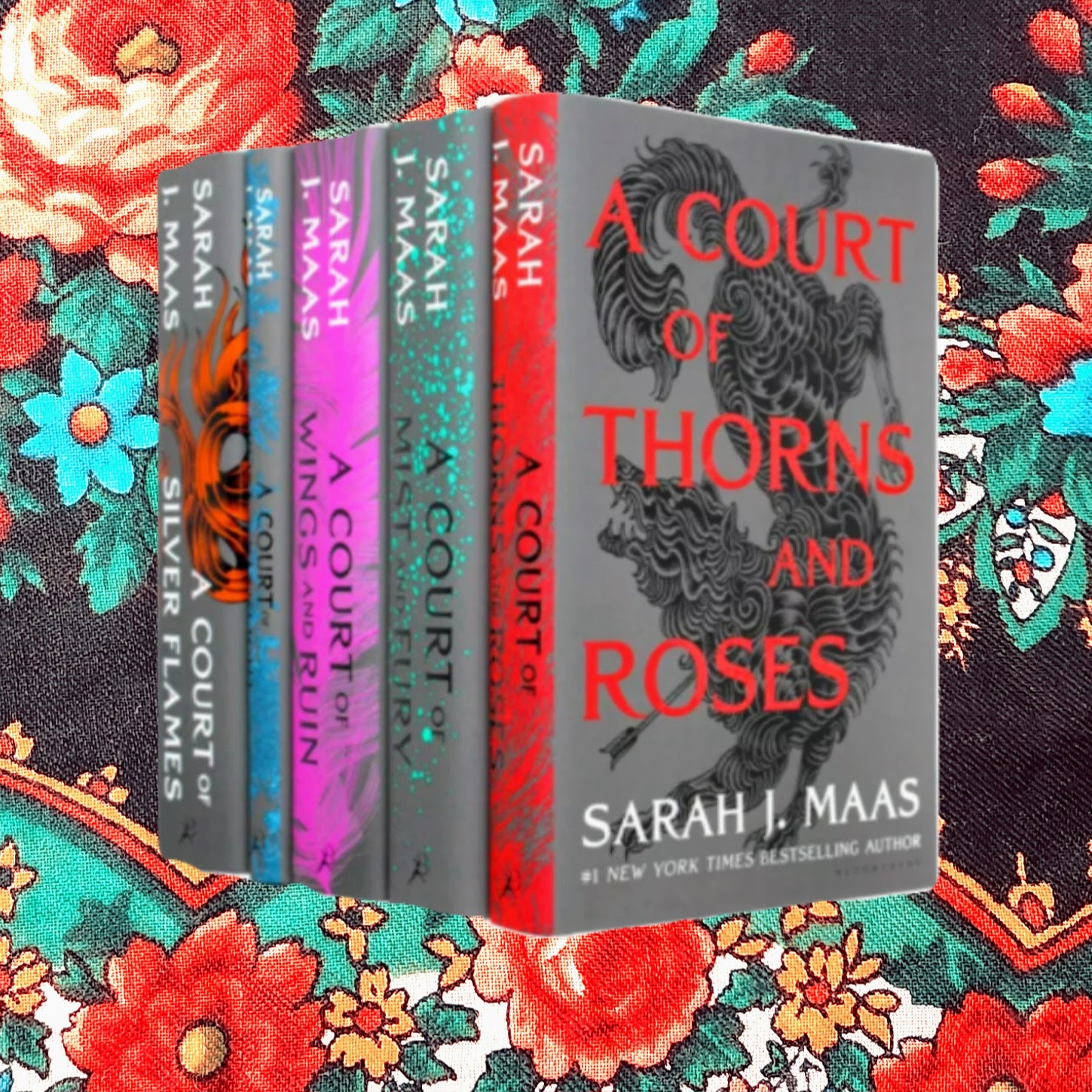
I didn’t have a smooth introduction to A Court of Thorns and Roses by Sarah J. Maas. I took the recommendation of a friend to read the first book in the series, after having recently finished and LOVED another book they’d suggested — a fantasy-adventure with a romantic subplot and a moody, opulent aesthetic. I expected A Court of Thorns and Roses to be similar to that.
Instead what I got was Beauty and the Beast: Hunger Games Edition (now with 8000% more fairies!) featuring a main character who seemed incapable of interacting with a man without wanting to simultaneously murder and bang him. I was not into it.
So I decided I wasn’t going to continue the series.
Except, I kept seeing friends talk about it. I kept getting ads for T-shirts with references to it. I kept seeing it virtually everywhere that had any books for sale, and I started to wonder why A Court of Thorns and Roses seemed to slap for everyone but me.
I waded into the second book, and it turns out everyone I talked to about this series was right: it DOES get better after the first book. The action gets a lot more interesting, as does the romance plotline, and the first novel starts to feel a lot more like a setup for the really juicy stuff. The subsequent books also reinforce the good qualities I initially overlooked about the first, like how gifted Maas is at worldbuilding, and how refreshing it is to have a romance story that celebrates female sexuality rather than fetishizing virginity.
And it’s even enjoyable to see Maas’s writing become stronger over the course of the saga.
Below are my spoiler-free short reviews of each book. Disclaimer: My main genre is horror, and while I don’t dislike romances, I don’t pick them up very often — so consider this a perspective from a genre outsider.
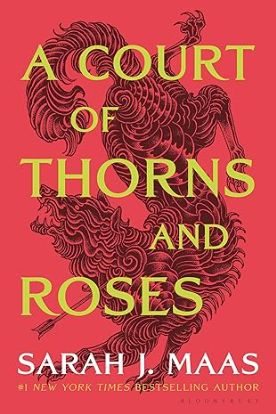
Book 1: A Court of Thorns and Roses Rating: ⭐⭐💫/5
Feyre Archeron is the youngest daughter of an impoverished merchant, living in a small village near the border to the Fae realm. The faeries who dwell there are lethal, devious and not to be trusted. After she kills a wolf in the woods near her home, Feyre learns that not only was the wolf a Fae male in diguise, but that she will need to pay the debt by becoming a prisoner of the wolf’s lord, a mysterious masked male named Tamlin. As her fear and hate gradually transform into curiosity and passion, Feyre will learn that many of her assumptions about the Fae were wrong. But just as she’s starting to get used to this new life, she learns of the true threat to the human and Fae realms — and that some truths about the Fae are just as terrifying as the stories she grew up on.
Though my initial impressions may have caused me to judge this book too harshly, it does suffer from some serious issues. The writing style really grated on me, and I hated how often Feyre was dumb or reckless just for the sake of the plot. And the main villain was so cartoonishly, one-dimensionally evil that it was hard to take her seriously. However, the imagery throughout is strong, and Feyre does turn out to be a well-executed main character. She doesn’t just float through the story on charm, beauty and ace skills — she makes mistakes, gets in over her head, and sometimes gets seriously injured in the process, which makes her journey more believable. While I still think it’s the weakest book in the series, it does set up plenty of interesting plot points that pay off in future books.
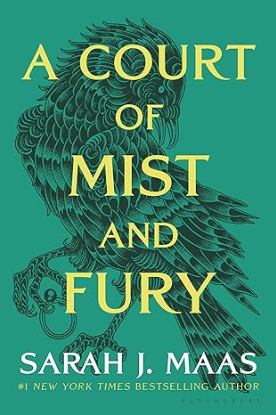
Book 2: A Court of Mist and Fury Rating: ⭐⭐⭐⭐/5
Safe in her new life, Feyre knows she should be ready to live her happily ever after…but she can’t seem to get past the horrors she endured under The Mountain — nor can she seem to make Tamlin understand the depth of her depression. Forced to uphold her bargain to spend time in the Night Court with Rhysand, Feyre finds herself torn between two worlds: The strong, bright Spring and the brooding, relentless Night. Now, as she faces a looming evil that threatens the balance of the Human and Fae realms alike, she’ll need to face her demons head-on in order to unlock her inner power — which could be the only key to stopping what’s coming.
A Court of Mist and Fury really cranks up the heat on this series. The stakes are higher, the twists are more breathtaking, and the sex scenes are steamier. I listened to this on audiobook, and definitely caught myself stopped dead in the middle of things I was doing, just listening with my mouth open because HOLY SHIT is there a lot of amazing action in this book. Maas’s writing style is noticeably improved in this sequel, but there are still quite a few cringe-worthy phrasings, characterizations and plot holes that I felt prevented me from completely enjoying it. Still, though, that ending had me immediately ready to jump feet-first into the next book.
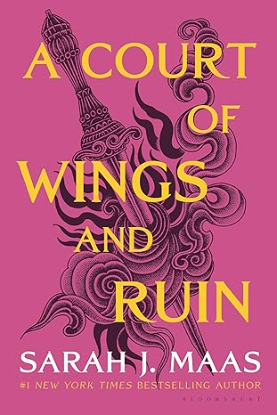
Book 3: A Court of Wings and Ruin Rating: ⭐⭐⭐/5
Feyre is back in the Spring Court, and with the King of Hybern threatening to invade Prythian with all his forces, one big question lingers in Feyre’s mind: is Tamlin her friend or her enemy? Games of deception and intrigue are afoot as she fights to get back to her sisters. But before she can return home, she needs to collect all the intel she can to make sure her new-found family doesn’t get swept away by the impending war.
A Court of Wings and Ruin is…fine, she said with a sigh. The story is engaging, it’s sexy in all the right places, and plotlines that have been brewing for a while do get some payoff. But I felt like Maas put all this momentum into getting all the moving pieces placed for this ultimate confrontation, then just kind of…prematurely ejaculated? Not my favorite metaphor, but that’s honestly what it felt like. She had all of these juicy plot elements ready to put into play, the payoff was gonna be so good…and then she blew the whole load in an unsatisfying manner over the course of just a few chapters. Moments that should have been tense and thrilling resolved fairly quickly in disappointing or predictable ways. And I had a big “Didn’t we just do this??” moment that really spoiled any positive feelings I may have developed in the first 3/4 of the book. But since I didn’t hate it all the way through, and since there were some enjoyable scenes and nice character developments, three stars it is.
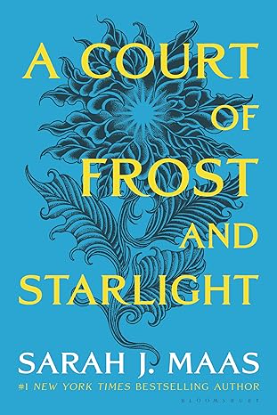
Book 4: A Court of Frost and Starlight Rating: ⭐⭐⭐💫/5
In this holiday-themed novella, Feyre faces Winter Solstice — and her birthday — in a city traumatized by the recent war. As she juggles the challenges of leadership with the struggle of finding the right gifts for her loved ones, she’ll learn that there is a glimmer of hope in every darkness.
I really love that SJM gave her characters a little holiday special. This book certainly isn’t the most exciting, but it is the shortest, so it’s already the best one in the series. Joking aside, ACOFAS is a nice little break that gives closure on some plot points from book 3, offers some enjoyable character moments, and introduces some info to get readers excited about what’s to come. Feyre continues her tradition of making idiotic decisions, but this is the character we’ve chosen to follow through an epic saga, so. However, we won’t have to deal with too much more of her, because…
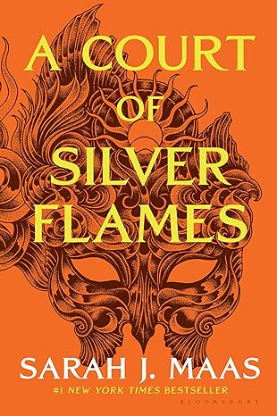
Book 5: A Court of Silver Flames Rating: ⭐⭐⭐⭐/5
After surviving the miseries of the war with Hybern, Nesta struggles to cope with her new life in Velaris. When her excesses go too far, she’s forced to move into the House of Wind where the only exit is a 10,000-step staircase. Even worse, she’ll have to undergo daily training with Cassian, the commander of Rhysand’s armies, who she’s been avoiding since the end of the war. At this point, she’s ready to give up on herself. But with a new threat looming, Nesta’s mysterious new powers may be the key to defending Prythian — once and for all.
I love it any time an author is able to get me to root for an unlikeable character, and Maas definitely got me there for Nesta in ACOSF. Before I got to this point in the series, I didn’t think I wanted to read a whole book about Nesta. However, by the end of this book, I was like, “Feyre who?” The romance plotline was fun and sexy, but I also loved the female friendships that Nesta built over the course of the story and how crucial they were to her development as a character. This would almost be a five-star book for me, except for some plot holes big enough to drive a freight train through. For the most part, though, I genuinely enjoyed returning to the world of Prythian for this story.
***
It would have been easy for me to dismiss ACOTAR as over-hyped junk, but I’m really glad I pushed past my initial impressions and kept reading — because as soapy and melodramatic as it can be, as audaciously large as some of the plot holes are, and as unabashedly horny as it is, ACOTAR does so many things right.
Unlike much of the romance genre, the characters in this series model consent, female sexual autonomy, and positive masculinity— not in every situation, but enough to be notable and refreshing.
And even though it’s a romance, it still manages to highlight and celebrate friendships between women. Those relationships aren’t just background action or devices to get the love interests together — they really matter to the plot and the development of the characters. I adore that.
Honestly, if you’ve never read the series before and are thinking about picking it up, this is what I recommend: start withA Court of Mist and Fury. This is the book that most fans seem to love best, and it’s where the “real” action of the series starts. If you like it, then treat A Court of Thorns and Roses as a prequel, and go back to get the deets on what went down between Feyre and Tamlin then. But if Book 2 doesn’t trip your trigger, then I think you can safely say that ACOTAR isn’t the series for you.
Every now and then I find myself needing to take a break from reading horror. A Court of Thorns and Roses by Sarah J. Maas has turned out to be a perfect series for that. They weren’t my favorite books I’ve read in the past couple of years, but they were a lot of fun, and it’s safe to say that I’m hooked. I will definitely be back for book 6.
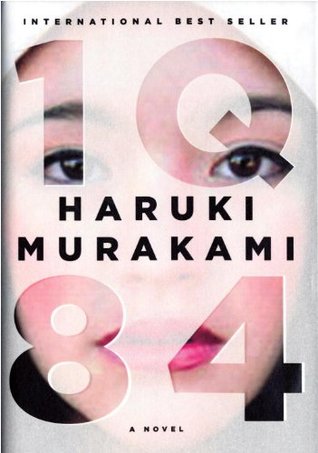
Haruki Murakami’s epic masterpiece 1Q84 had been on my to-read list for nearly a decade. Now that the ‘rona has me staying home a lot more, I figured there was no better time for me to tackle this behemoth. Clocking in at over 1300 pages in the Kindle edition, it’s now officially the longest novel I’ve read (before now, that title was held by the extended edition of Stephen King’s The Stand). After more than two months, I finally finished it. After all that I can say, while it wasn’t without its flaws and frustrations, I enjoyed this book a lot and am glad I took the time to dive into it.
1Q84 follows Aomame, a fitness instructor-turned-assassin, and Tengo, an unassuming math prodigy and author, as they’re thrown into the bizarro world of 1Q84, which looks almost exactly like their current year of 1984, but with a few noticeable differences. As these two get tangled in the complicated webs spun by a local religious cult and its founding family, they rely on their own intuition, as well as simple fate, to find each other in the big, bustling backdrop of 1980s Tokyo.
As a novel, 1Q84 unfolds like a slow-blooming rose. Alternating back and forth between the two main characters (with a third character added to the rotation in part 3), each chapter gradually builds on the last, slowly adding backstory, dimension, and exposition. A lot of things get rehashed, which gets a little exhausting, but not enough so that I wanted to put the book down. For instance, characters, places, and routines are described over and over–like, I get it, the guy has a misshapen head, I don’t need to hear about it again. But often Murakami does this to add small details that weren’t in the preceding description, thus building rich images of these characters and places without throwing a ton of new information at the reader all at once. It’s a technique that a really appreciate, though it results in a plot that took a long while to get going and really grab my attention.
Another thing I noticed about 1Q84 is how every character is a paragon of their own virtues and talents, unmatched in their respective fields. Their instincts are spot-on, and they are consistently able to deduce much more about these tangled plot webs than the average person might be capable of. This infallible quality of the main characters lends to the sort of storybook-legend feel of the novel.
For the most part, I adored Murakami’s writing style and descriptions. The man is truly a master of prose. However, my main beef was the over-sexualization of the female characters. For instance, how come every time Aomame thinks of her deceased female friends, she thinks about their naked breasts? (Obviously anecdotal, but I’ve got plenty of female friends, and I almost never think of their tits.) Why are women fondling each other every time they end up sharing a bed? How many times do we have to be reminded that the 17 year-old cult leader’s daughter has huge boobs? Granted, this was a minor annoyance in what was overall a really great read (and to be fair, we also got plenty of mentions of Tengo’s penis, even though he never once experimented sexually with his male friends), but I did laugh out loud a couple times at the absurdity of these portrayals.
One more minor gripe: In 1300 pages, you’d think that there would be plenty of room to wrap up all those dangling plot threads. But you would be wrong. While most of the main plot arcs get resolved–and to its credit, 1Q84 does a fantastic job giving most of the main characters satisfying endings–when it was all over, I still had so many questions. Certain plot arcs were touched on but never followed up with an explanation or resolution, and others seemed like they were just about to get somewhere when the book suddenly ended. For my time investment, I do wish that certain elements of the plot had been explained or resolved better.
After spending a long time in the world of 1Q84, I find myself a little sad that it’s over. But I also feel a wonderful sense of achievement having finished this beautiful love story. Four and a half stars is probably the most accurate rating I could give this book. Now I’m off to enjoy a nice, short 300-pager.
Pride and Prejudice — the original literary chick flick. I’m a little bit ashamed that, though I claim to be well-read, it’s only just now that I’ve gotten around to reading it. It seems like one of those classic novels that a girl has to read at least once in her life. I wasn’t going to post a review for it, because it’s been around so long and is referenced so much that it seems a little redundant. I do want to record my thoughts on it, though–and, really, what’s a review besides exactly that?
I will say, I was a little frustrated about having to go on Wikipedia and look up a synopsis. The book jacket on my copy said a lot about it being “a timeless classic,” and “beloved by generations,” but it didn’t tell me what the story was actually about. Maybe I’m lame for not already knowing, but all the prior knowledge I had of it was from lit majors mentally creaming themselves over Mr. Darcy. And I do like to have a rough idea of what is going to happen in a book before I read it.
Pretty much, you have the Bennets. They have five daughters who they are trying to marry off, and wouldn’t you know it, a rich and handsome bachelor (Mr. Bingley) happens to move in down the road from them. He quickly becomes enamoured of the oldest daughter, Jane. His friend, Mr. Darcy, is an even more handsome and rich bachelor, but everyone decides pretty fast that he’s a total prick. He’s so much of a prick that he falls in love with Elizabeth Bennet, but decides that her family is too podunk for him, and so bundles Mr. Bingley off to London with the reassurance that Jane isn’t that into him, anyway. When Mr. Darcy finally does come around and propose to Elizabeth, she naturally tells him to get fucked by the horse he rode in on. Unfortunately, it won’t take long for her to figure out that he’s actually a pretty rad dude, and turning him down may have been the biggest mistake of her life.
Also, there’s a clergyman named Mr. Collins who’s a total tool.
Forest can tell you that I have very little patience for books that I can’t basically speed-read. So, pretty much, anything pre-1900 or written by William S. Burroughs is out of the question for me. Or it’ll take me forever to get through it because I konk out ten pages in (sorry Jane Eyre, I love you, but you took me six months to read). But Pride and Prejudice was unexpectedly easy. I read the bulk of it in just two sittings, and even found myself adopting the language style a bit when I’d break to talk to someone.
I can see why this story has appealed to girls through multiple generations. Isn’t that just what we all want, to be pursued by the handsome bad boy, and for him to be so hurt by our rejection that he totally changes his act and becomes basically the perfect guy? Oh, and you think that men and women play games now? Nineteenth century courtship: because it’s inappropriate to openly discuss your feelings, you have to rely on subtle manners and body language to convey your interest or lack thereof. And even if you don’t like the guy, he’ll probably propose to you anyway. At least, that’s the way it plays out in Pride and Prejudice.


 Haruki Murakami’s epic masterpiece 1Q84 had been on my to-read list for nearly a decade. Now that the ‘rona has me staying home a lot more, I figured there was no better time for me to tackle this behemoth. Clocking in at over 1300 pages in the Kindle edition, it’s now officially the longest novel I’ve read (before now, that title was held by the extended edition of Stephen King’s The Stand). After more than two months, I finally finished it. After all that I can say, while it wasn’t without its flaws and frustrations, I enjoyed this book a lot and am glad I took the time to dive into it.
 Adequate Squatch Presents